
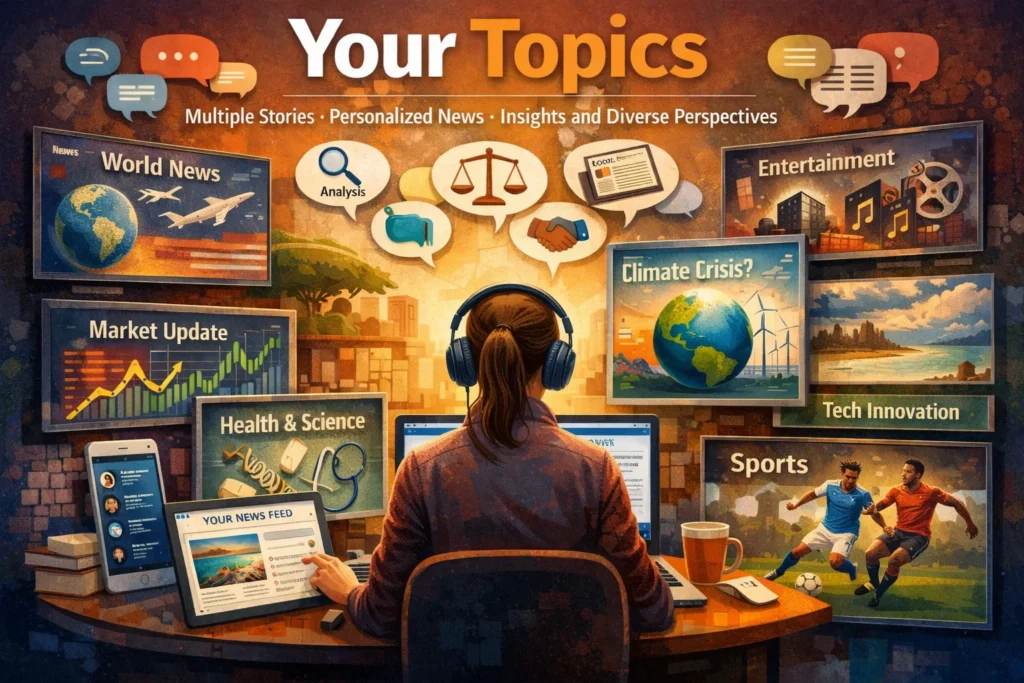

In today’s fast-paced digital world, people consume more information than ever before. From breaking news and entertainment to technology updates and lifestyle trends, content is everywhere. However, this abundance has created a new challenge: information overload. Readers no longer want to scroll endlessly through irrelevant content. Instead, they want stories that match their interests, preferences, and needs.
This is where the concept of “Your Topics | Multiple Stories” becomes highly relevant. It represents a modern content model that organizes information around user-selected topics while offering multiple perspectives, updates, and stories within each topic. Rather than presenting a single article or viewpoint, this approach provides a rich, layered experience that helps users understand subjects in depth.
This article explores the meaning, importance, structure, benefits, challenges, and future of the Your Topics | Multiple Stories concept, and why it is shaping the future of digital publishing.
What Does “Your Topics | Multiple Stories” Mean?
At its core, Your Topics | Multiple Stories is a personalized content framework. It allows users to:
Select topics they care about
Receive multiple articles or stories related to those topics
Explore different viewpoints, reminders, updates, and developments
Instead of a one-size-fits-all homepage, users get a customized feed that reflects their interests. For example:
A sports fan may choose football, cricket, and player transfers
A tech enthusiast may select artificial intelligence, smartphones, and cybersecurity
A lifestyle reader may prefer health, travel, and self-improvement
Each topic then includes multiple stories, such as news updates, opinion pieces, guides, interviews, and analysis.
The Evolution of Topic-Based Content
Traditional Media Model
In traditional newspapers and TV channels, content was organized by fixed sections like:
News
Sports
Business
Entertainment
Readers had little control over what they consumed. Editors decided what was important, and everyone received the same information.
Rise of Digital Media
With the rise of websites, blogs, and social media, content became more accessible. However, early digital platforms still relied on generic homepages and trending lists.
Shift Toward Personalization
Modern platforms now focus on user-centric content delivery. Algorithms, user preferences, and topic selection allow platforms to serve content that feels personal and relevant.
The Your Topics | Multiple Stories model is a natural evolution of this trend.
Why Multiple Stories Matter
- Broader Perspective
A single story rarely tells the full truth. Multiple stories allow readers to:
Compare different viewpoints
Understand context
Identify bias or misinformation
For example, political news covered by multiple sources provides a more balanced understanding.
- Continuous Updates
Topics evolve over time. Multiple stories ensure that users receive:
Breaking news
Follow-up reports
In-depth analysis
This is especially important for fast-moving topics like technology, finance, and global events.
- Deeper Engagement
When users see several stories under one topic, they are more likely to:
Spend more time on the platform
Explore related content
Develop trust in the source
How “Your Topics | Multiple Stories” Works
Topic Selection
Users can choose topics manually or allow platforms to suggest topics based on:
Reading history
Search behavior
Likes, shares, and comments
Content Aggregation
Once topics are selected, the system gathers content from:
Internal writers
News agencies
Blogs and partners
User-generated content
Smart Filtering
Algorithms filter content to ensure:
Relevance
Quality
Freshness
Low-quality or repetitive stories are minimized.
Presentation
Stories are displayed in an organized layout, such as:
Topic cards
Vertical story lists
Timeline-based updates
Popular Platforms Using This Model
Many leading platforms already use variations of Your Topics | Multiple Stories, including:
Google News
Medium
Apple News
Reddit (topic-based communities)
These platforms demonstrate how effective personalized, multi-story content can be.
Benefits for Readers
- Personal Relevance
Readers see content that matches their interests, not random headlines.
- Time Efficiency
Instead of searching across multiple websites, users find everything related to a topic in one place.
- Knowledge Expansion
Multiple stories help users go beyond headlines and gain deeper insights.
- Reduced Information Fatigue
Filtered content reduces mental overload and frustration.
Benefits for Content Creators and Publishers
Increased Visibility
Topic-based systems help older or niche articles resurface when relevant.
Higher Engagement Rates
Readers stay longer and interact more with multi-story content.
Better Monetization
Advertisers prefer platforms with personalized content because it leads to higher conversion rates.
Stronger Brand Authority
Providing comprehensive coverage on topics builds trust and credibility.
SEO Advantages of “Your Topics | Multiple Stories”
From an SEO perspective, this model is extremely powerful.
Keyword Clustering
Multiple stories allow publishers to target:
Primary keywords
Long-tail keywords
Semantic variations
Improved Internal Linking
Topic pages can link related articles, improving crawlability and rankings.
Higher Dwell Time
Users spend more time reading multiple stories, which signals quality to search engines.
Content Freshness
Regular updates within topics keep pages relevant and competitive.
Content Types Within Multiple Stories
A well-structured topic may include:
Breaking news
How-to guides
Opinion articles
Interviews
Case studies
Explainers
FAQs
This variety keeps readers engaged and informed.
Challenges of Implementing This Model
Content Quality Control
Publishing multiple stories increases the risk of low-quality content. Strong editorial standards are essential.
Algorithm Bias
Over-personalization can create echo chambers, limiting exposure to diverse viewpoints.
Technical Complexity
Building smart recommendation systems requires advanced technology and data handling.
User Privacy Concerns
Platforms must handle user data responsibly and transparently.
Best Practices for Using “Your Topics | Multiple Stories”
Balance Personalization and Diversity
Offer relevant content while occasionally introducing new perspectives.
Update Topics Regularly
Remove outdated stories and add fresh content.
Encourage User Feedback
Allow users to refine topics and report irrelevant content.
Maintain Editorial Integrity
Accuracy and credibility should always come first.
The Role of Artificial Intelligence
AI plays a major role in making Your Topics | Multiple Stories successful.
Content Recommendation
Machine learning models predict what users want to read next.
Natural Language Processing
AI analyzes article content to group stories under correct topics.
Sentiment Analysis
Understanding tone helps present balanced perspectives.
Automation
AI helps manage large volumes of content efficiently.
Future of Topic-Based Multi-Story Content
The future looks promising as technology continues to evolve.
Voice and Visual Content
Users may soon explore topics through voice assistants and video summaries.
Hyper-Personalization
Feeds may adapt in real time based on mood, location, or time of day.
Cross-Platform Integration
Topics may sync across devices, apps, and platforms.
Community-Driven Stories
Users may contribute stories, opinions, and insights under shared topics.
Why This Model Matters in a Digital Society
In an era of misinformation and short attention spans, Your Topics | Multiple Stories promotes:
Informed decision-making
Critical thinking
Deeper understanding
It shifts content consumption from passive scrolling to active learning.
Conclusion
Your Topics | Multiple Stories is more than just a content format—it is a philosophy of personalized, meaningful, and comprehensive information delivery. By focusing on user interests and offering multiple stories per topic, platforms can create richer experiences for readers while benefiting creators and advertisers alike.
As digital media continues to grow, this model will likely become the standard rather than the exception. Whether you are a reader seeking clarity, a publisher aiming for engagement, or a brand building authority, embracing Your Topics | Multiple Stories is a smart and future-ready approach.