
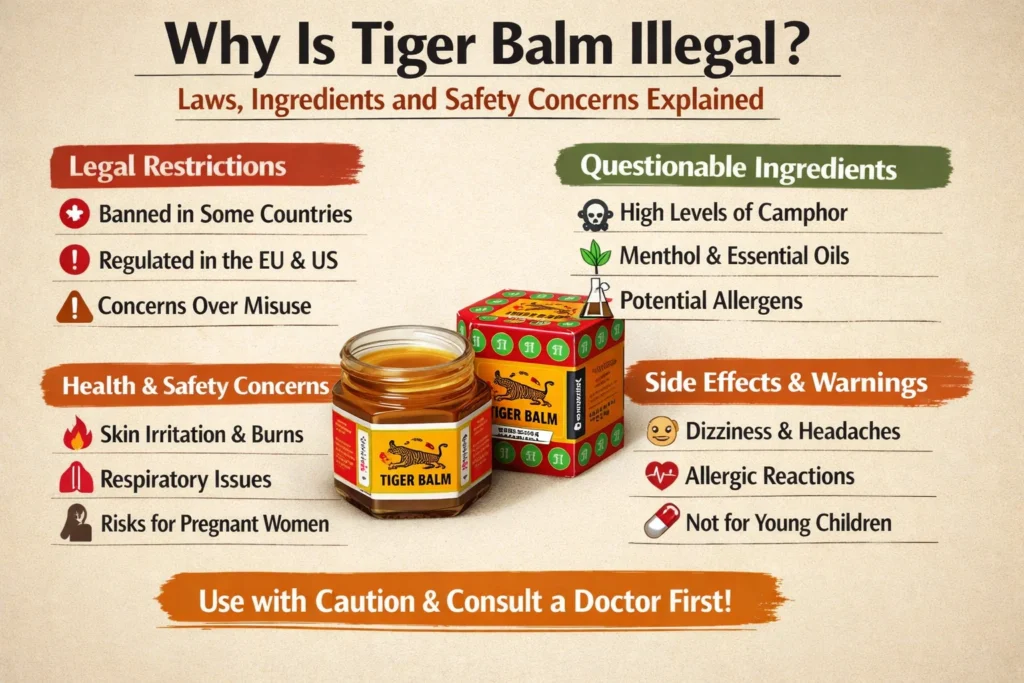

Tiger Balm is one of the most well-known topical pain relief products in the world. Used for muscle aches, headaches, joint pain, insect bites, and even congestion, it has been a household remedy for more than a century. Despite its popularity, many people are surprised to hear claims such as “Tiger Balm is illegal” or “Tiger Balm is banned in some countries.”
This has led to widespread confusion and curiosity. Why would a product sold in pharmacies worldwide be illegal anywhere? Is Tiger Balm actually banned, or are these claims exaggerated? What ingredients raise legal concerns, and how do regulations differ across countries?
This article provides a complete, in-depth explanation of why Tiger Balm is sometimes considered illegal, restricted, or controversial. We will explore its ingredients, regulatory issues, safety concerns, and legal status across different regions.
What Is Tiger Balm?
Tiger Balm is a topical analgesic ointment developed in the late 19th century by Aw Chu Kin, a Chinese herbalist, and later popularized by his sons in Southeast Asia. It is now manufactured by Haw Par Healthcare, a Singapore-based company.
Tiger Balm works by creating a warming or cooling sensation on the skin, which helps distract the brain from deeper muscle or joint pain. This mechanism is known as counter-irritation.
Common Uses of Tiger Balm
Muscle pain and stiffness
Joint pain and arthritis
Headaches and migraines
Back pain
Insect bites
Cold and congestion relief
Key Ingredients in Tiger Balm
The legal concerns surrounding Tiger Balm are mostly related to its active ingredients, which include:
Camphor
Menthol
Cajuput oil
Clove oil
Cassia oil
Paraffin base
Among these, camphor is the ingredient most often responsible for restrictions or bans.
Why Is Tiger Balm Considered Illegal in Some Places?
The short answer is this:
Tiger Balm is not globally illegal, but certain versions or formulations are restricted or banned in specific countries due to ingredient regulations, especially camphor content.
Let’s break down the main reasons.
- Camphor Content and Legal Restrictions
What Is Camphor?
Camphor is a naturally occurring compound derived from the wood of camphor trees or synthesized chemically. It has strong medicinal properties but can be toxic if misused.
Why Is Camphor Regulated?
High concentrations of camphor can cause:
Skin irritation or burns
Nausea and vomiting
Seizures
Breathing problems
Serious poisoning if ingested, especially in children
Because of these risks, many governments strictly regulate how much camphor can be included in consumer products.
Camphor Limits by Country
United States (FDA): Camphor is limited to 11% maximum in over-the-counter topical products.
European Union: Camphor is allowed but regulated under cosmetic and medicinal laws.
Canada: Camphor use is restricted, and certain high-camphor products require special approval.
Australia: Products with high camphor concentrations may be classified as medicines rather than cosmetics.
Older or imported versions of Tiger Balm sometimes exceed local camphor limits, making them illegal to sell in those regions.
- Different Formulations Across Countries
One major source of confusion is that not all Tiger Balm products are the same.
Regional Variations
Tiger Balm is manufactured in multiple formulations depending on:
Country regulations
Intended use
Strength classification
For example:
Tiger Balm Red has a warming effect and usually contains more camphor.
Tiger Balm White is milder and often used for headaches and congestion.
In some cases, older or foreign versions sold online or brought through personal import may not meet the legal requirements of the destination country.
- Misconception: “Tiger Balm Contains Tiger Parts”
A long-standing myth suggests that Tiger Balm contains ingredients derived from real tigers, making it illegal under wildlife protection laws.
The Truth
Tiger Balm does not contain any tiger parts
The name and logo are purely symbolic
No animal products from endangered species are used
This misconception has led to rumors of bans, but wildlife laws are not the reason for Tiger Balm restrictions.
- Child Safety and Poisoning Risks
Why Governments Are Concerned
Camphor poisoning in children is a serious issue. Even a small amount ingested accidentally can cause:
Rapid onset seizures
Central nervous system toxicity
Hospitalization
Because Tiger Balm has a strong smell and looks like an ointment or candy to children, it poses an accidental ingestion risk.
Legal Impact
In some countries:
Strong camphor products must have child-resistant packaging
Warning labels are mandatory
Sales may be limited to pharmacies only
If a product does not meet these standards, it can be classified as illegal.
- Over-the-Counter vs Medicinal Classification
Another reason Tiger Balm faces legal issues is how it is classified.
Cosmetic vs Medicine
Different countries classify topical pain relief products differently:
Some treat Tiger Balm as a cosmetic
Others classify it as an over-the-counter medicine
If a product is sold as a cosmetic but contains medicinal-level ingredients, regulators may ban or recall it.
- Import and Customs Restrictions
In many cases, Tiger Balm is not illegal for personal use but illegal to import or sell without authorization.
Common Scenarios
Buying Tiger Balm from international sellers online
Bringing large quantities through customs
Selling unapproved versions locally
Customs authorities may seize products that:
Lack local regulatory approval
Have labels in foreign languages only
Contain unverified ingredient concentrations
This leads people to believe Tiger Balm itself is illegal, when in fact the issue is unregulated importation.
- Is Tiger Balm Illegal in the United States?
Legal Status in the U.S.
Tiger Balm is legal in the United States, but only FDA-compliant versions.
Approved versions are sold in major stores and pharmacies
Products must meet camphor concentration limits
Labels must include safety warnings
When It Becomes Illegal
Selling non-FDA-approved imported versions
Exceeding allowed camphor percentages
Making unverified medical claims
- Is Tiger Balm Banned in Europe?
In the European Union:
Tiger Balm is generally legal
It must comply with EU cosmetic or medicinal regulations
Some stronger versions may require pharmacy-only sale
Certain countries may restrict specific formulations, not the brand as a whole.
- Is Tiger Balm Illegal in Other Countries?
Canada
Some Tiger Balm products require approval
High camphor products are restricted
Legal versions are available in pharmacies
Australia
Products with high camphor levels may be regulated as medicines
Import restrictions apply to unapproved versions
Middle East and Asia
Generally legal
Regulations vary depending on camphor content and labeling
- Online Misinformation and Viral Claims
Social media and blogs often exaggerate claims such as:
“Tiger Balm is banned worldwide”
“Tiger Balm is illegal because it contains tiger oil”
“Tiger Balm is dangerous and outlawed”
These claims are misleading or false. In reality:
Only certain formulations are restricted
The product itself is not universally illegal
Regulations are ingredient-based, not brand-based
Safety Guidelines for Using Tiger Balm
Even where legal, Tiger Balm should be used responsibly.
Proper Usage Tips
Apply only to intact skin
Avoid eyes, mouth, and mucous membranes
Do not use on children under recommended age
Wash hands after application
Never ingest the product
Following these guidelines reduces health risks and ensures safe use.
Alternatives to Tiger Balm
For those concerned about legality or sensitivity, alternatives include:
Menthol-based creams
Capsaicin ointments
Arnica gel
Eucalyptus-based balms
FDA-approved pain relief patches
These products often follow stricter regulations and may be safer for some users.
Conclusion: Why Is Tiger Balm Illegal?
The idea that Tiger Balm is illegal comes from regulatory misunderstandings, ingredient restrictions, and misinformation.
Key Takeaways
Tiger Balm is not globally illegal
Restrictions are mainly due to camphor content
Different countries have different safety laws
Illegal status usually applies to specific versions, not the brand
Approved formulations are widely and legally sold worldwide