
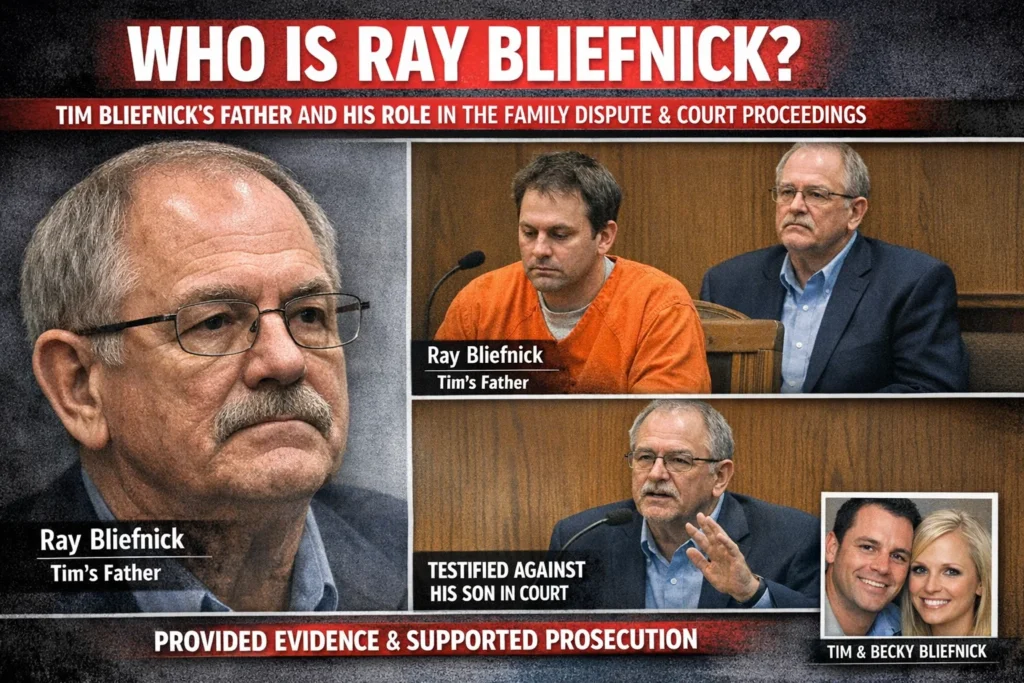

Public interest in criminal cases often extends beyond the accused to their family members. In recent years, the name Tim Bliefnick has appeared widely in news coverage due to a tragic and highly publicized legal case in the United States. As media attention intensified, curiosity naturally grew about his family—especially Tim Bliefnick’s father, a figure who has largely remained out of the public spotlight.
This article explores everything that is publicly known and responsibly discussed about Tim Bliefnick’s father. It also examines the broader themes surrounding families connected to high-profile criminal cases: privacy, emotional impact, public judgment, and the complex reality of being related to someone facing serious allegations.
Because Tim Bliefnick’s father is a private individual, much of his life has not been documented in detail. This article focuses on verified context, social background, and the role of a father within such circumstances—without speculation or unproven claims.
Who Is Tim Bliefnick?
To understand why people are searching for information about Tim Bliefnick’s father, it is important to briefly understand who Tim Bliefnick is.
Tim Bliefnick is an American man whose name became widely known due to his involvement in a serious criminal investigation and subsequent legal proceedings. The case drew national attention because of its tragic nature and the broader conversations it sparked around domestic relationships, justice, and accountability.
While news coverage primarily focused on Tim Bliefnick himself, public curiosity soon expanded to his family background, including his upbringing and parental influences—especially his father.
Tim Bliefnick’s Father: A Private Individual
Limited Public Information
Unlike his son, Tim Bliefnick’s father has never been a public figure. He did not seek media attention and has not been actively involved in public interviews, press statements, or public commentary related to the case.
This lack of public exposure is intentional and understandable. In most criminal cases, family members—especially parents—choose to remain private, both for emotional protection and legal reasons.
Respect for Privacy
It is important to emphasize that being related to someone accused or convicted of a crime does not make a person responsible for those actions. Tim Bliefnick’s father has not been accused of any wrongdoing, nor has he been implicated in any legal proceedings.
Respecting privacy in such situations is essential, especially when discussing individuals who did not choose to be part of public scrutiny.
Family Background and Upbringing
The Role of a Father
A father traditionally plays a significant role in a child’s upbringing—providing emotional support, discipline, values, and guidance. Like many American families, the Bliefnick household likely followed a conventional structure, although exact details remain private.
There is no public evidence suggesting that Tim Bliefnick’s father was abusive, neglectful, or involved in any behavior that directly contributed to the tragic events later in his son’s life.
Nature vs. Nurture Debate
Whenever a criminal case becomes public, people often question the family environment:
Was the upbringing stable?
Were there warning signs?
Did parenting influence behavior?
Experts repeatedly stress that adult actions are shaped by many factors, including personal choices, mental health, relationships, and life circumstances. Parental influence is only one part of a much larger picture.
Emotional Impact on Parents
The Pain of Public Shame
For any parent, learning that their child is accused of or convicted of a serious crime is devastating. In addition to personal grief, parents must cope with:
Public judgment
Media scrutiny
Social isolation
Emotional trauma
Tim Bliefnick’s father likely experienced profound emotional distress as the case unfolded, even while remaining silent publicly.
Grief on Multiple Levels
Parents in such situations grieve in multiple ways:
Grief for the victim and their family
Grief for the child they raised
Grief for the life they believed their child would have
Grief over damaged family relationships
This layered grief is often invisible to the public.
Media Coverage and the Father’s Absence
Why He Was Not Seen in Court Coverage
In many criminal trials, parents of the accused choose not to appear publicly. Reasons may include:
Legal advice
Emotional well-being
Health concerns
Desire to avoid influencing the case
Tim Bliefnick’s father did not become a visible presence during court proceedings, reinforcing his preference for privacy.
Silence Does Not Mean Approval
One common misconception is that silence from family members implies support or denial of wrongdoing. In reality, silence often reflects pain, confusion, and a desire to avoid public speculation.
Social and Cultural Expectations of Fathers
Fathers and Accountability
Society often places implicit blame on parents when a child commits a crime. Fathers, in particular, are sometimes portrayed as responsible for instilling discipline or moral values.
However, psychologists and sociologists emphasize that parents cannot control their adult children’s actions, especially long after childhood has passed.
Generational Differences
Values and expectations evolve over time. A father may raise a child with traditional values, only to see that child make choices shaped by modern pressures, relationships, and stressors that the parent never experienced.
The Psychological Burden on Families
Living with Permanent Association
Even when a case ends, family members often remain permanently associated with it in public memory. For Tim Bliefnick’s father, this likely means:
Being recognized locally
Facing uncomfortable questions
Carrying emotional weight quietly
This burden can last a lifetime.
Coping Mechanisms
Parents in similar situations often cope by:
Seeking counseling
Leaning on close family
Avoiding media
Focusing on faith or personal reflection
While no public information confirms which methods Tim Bliefnick’s father used, these are common approaches.
Ethical Reporting and Responsible Curiosity
Why Details Are Scarce
Journalists and responsible platforms often avoid publishing details about family members unless they are directly relevant. This protects innocent individuals from unnecessary harm.
The lack of detailed information about Tim Bliefnick’s father reflects ethical boundaries, not secrecy.
The Line Between Interest and Intrusion
Public curiosity is natural, but it must be balanced with empathy. Tim Bliefnick’s father did not choose publicity, and his life should not be reduced to his son’s actions.
Lessons from Similar Cases
History shows many examples where parents of accused individuals:
Remained silent
Issued brief statements expressing sympathy for victims
Asked for privacy
These patterns demonstrate that silence is often the most humane and lawful option.
Public Reaction and Online Speculation
The Danger of Assumptions
Online discussions sometimes speculate about family backgrounds without evidence. This can lead to:
Misinformation
Unfair blame
Emotional harm
There is no verified information suggesting that Tim Bliefnick’s father played any negative role in the events surrounding the case.
A Father First, Not a Headline
At the end of the day, Tim Bliefnick’s father is:
A private citizen
A parent facing an unimaginable situation
A person deserving of dignity and compassion
His identity should not be defined solely by his son’s legal troubles.
Conclusion
The story of Tim Bliefnick’s father is not one of controversy, public statements, or dramatic revelations. Instead, it is a story marked by silence, privacy, and emotional weight.
While public interest often seeks answers in family backgrounds, it is important to remember that parents are not extensions of their children’s actions. Tim Bliefnick’s father remains a largely unseen figure—not because of guilt or avoidance, but because he chose dignity and privacy during a deeply painful chapter.
In examining cases like this, empathy matters. Behind every headline is a family navigating loss, confusion, and grief away from cameras and commentary.