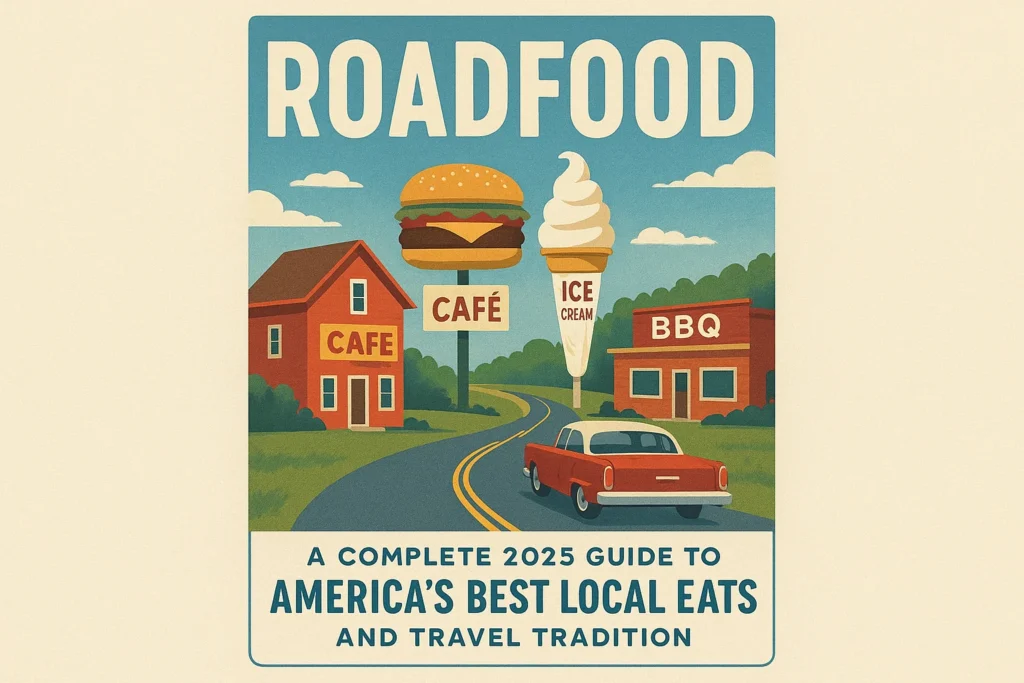

When you hear the word Roadfood, you might imagine a long highway, a dusty diner, and the smell of fresh pie or fried chicken from a roadside café. But what is Roadfood really? More than just meals on the go, Roadfood is an entire American travel and food movement that celebrates small-town eateries, regional dishes, and local flavor.
In this guide, we’ll explore the full story of Roadfood: what it means, where it came from, how it became a cultural icon, and why it continues to inspire travelers and food lovers in 2025.
The Meaning of Roadfood
At its core, Roadfood refers to locally owned, uniquely American eateries found along highways and backroads — not fancy restaurants or chain franchises, but real spots serving honest, home-cooked food.
The term Roadfood was popularized by Jane and Michael Stern, two travel writers who started exploring America in the early 1970s. Their mission was simple: find delicious, authentic food in unexpected places. Instead of five-star restaurants, they sought out diners, drive-ins, barbecue shacks, and mom-and-pop cafés.
When people ask, what is Roadfood, the answer isn’t just “food on the road.” It’s a discovery of America through its local kitchens — where recipes tell stories about regions, families, and traditions.
The History of Roadfood
Origins in the 1970s
The story of Roadfood began when Jane and Michael Stern published their first book, Roadfood, in 1977. It was a groundbreaking travel guide that mapped the best local restaurants across America. Long before the internet or Yelp, their book helped travelers find unforgettable meals in small towns.
They drove thousands of miles, ate in hundreds of diners, and documented dishes that defined American culture — from New England clam chowder to Texas brisket, Louisiana gumbo, and Midwestern pie.
Their book was more than a food guide — it became a cultural movement, giving recognition to small, hardworking cooks across the country.
Evolution Over the Years
In the decades that followed, Roadfood grew from a single book into a media brand — including updated editions, a website, and even a television series. Each version kept the same spirit: honest food, genuine people, and local stories.
By the 2000s, Roadfood was considered one of the most respected authorities on regional American cuisine. Travelers, food critics, and casual diners all trusted the Sterns’ recommendations for authentic experiences.
Roadfood as a Cultural Movement
Roadfood isn’t just a guidebook — it’s a celebration of regional identity. Each restaurant featured represents a community’s culture and pride.
When you visit a Roadfood spot, you’re not only eating; you’re learning about the people who’ve been making that dish for generations. For example:
In the South, Roadfood highlights fried chicken joints and BBQ smokehouses.
In the Midwest, it’s about pie cafés and meat-and-potato diners.
On the East Coast, it might be seafood shacks or clam bars.
Out West, it’s taco stands and burger stops with a local twist.
The beauty of Roadfood lies in how it connects food with storytelling — showing that American cuisine isn’t one thing, but a mix of local traditions and family recipes.
The Roadfood TV Series
One of the most popular modern adaptations of Roadfood is its television show. The “Roadfood” TV series takes viewers on cross-country adventures to meet local chefs, eat regional dishes, and explore the stories behind them.
Hosted by Misha Collins (known from Supernatural), the show captures the same excitement the Sterns once had: discovering great food and great people off the beaten path.
The TV version of Roadfood adds a fresh, modern layer to the brand, combining travel journalism, culinary exploration, and community storytelling — proving that even in the digital era, there’s still something magical about pulling over for a meal at a small-town diner.
Why Roadfood Matters in 2025
In an age dominated by food delivery apps and social media trends, Roadfood continues to matter — maybe now more than ever. Here’s why:
- It Preserves Local Culture
Each Roadfood stop protects regional identity. By eating local, travelers support independent owners who keep culinary traditions alive.
- It Encourages Real Travel
Instead of just “passing through,” Roadfood encourages exploration. It inspires travelers to slow down, take scenic routes, and experience places through taste.
- It Connects People
Sharing a meal at a Roadfood stop brings strangers together — truck drivers, families, locals, and tourists all sit side by side. It’s community in its purest form.
- It Promotes Sustainable Tourism
By choosing small local diners over chains, Roadfood travelers help small businesses thrive — creating sustainable tourism that benefits real people, not corporations.
Famous Roadfood Dishes and Destinations
If you’re still wondering what is Roadfood in action, here are some classic examples:
New Haven, Connecticut – Pizza (Apizza): Thin, crispy, coal-fired pies from local institutions like Pepe’s or Sally’s.
Memphis, Tennessee – Barbecue Ribs: Smoked low and slow with tangy sauce; a southern staple.
New Mexico – Green Chile Cheeseburger: A spicy twist on the American classic.
Louisiana – Gumbo & Po’boys: Soulful dishes blending Cajun and Creole traditions.
Wisconsin – Cheese Curds & Friday Fish Fry: Community-centered comfort food.
Texas – Brisket & Chili: Meat lovers’ paradise, cooked for hours over wood smoke.
Each dish tells the story of its region — and Roadfood captures those stories beautifully.
The Roadfood Website and Digital Era
In the 21st century, Roadfood expanded beyond books and TV. The Roadfood.com website became a hub for:
Restaurant reviews and maps
Community forums for travelers
Recipes from featured eateries
Photo galleries and travel tips
This digital transformation allowed a new generation of food lovers to join the movement. Whether you’re planning a cross-country trip or just a weekend road trip, the Roadfood website helps you discover great food in every corner of America.
Roadfood vs. Fast Food
One of the most common misconceptions is comparing Roadfood to fast food. But they couldn’t be more different.
Aspect Roadfood Fast Food
Ownership Local, family-run Corporate chains
Food Quality Homemade, fresh ingredients Processed and standardized
Experience Personal and cultural Quick and impersonal
Purpose To connect and explore To save time
When you eat Roadfood, you’re not just satisfying hunger — you’re experiencing America’s diversity through its kitchens.
The Future of Roadfood
As we look toward 2025 and beyond, Roadfood continues to evolve. With more people traveling by car again and seeking authentic experiences, Roadfood fits perfectly with the modern idea of slow travel and cultural exploration.
Future trends for Roadfood include:
Interactive mobile apps that map local eateries.
Community storytelling platforms where travelers share discoveries.
Integration with YouTube and TikTok, where users show their Roadfood finds.
Renewed focus on sustainability — eco-friendly travel and local sourcing.
The spirit of Roadfood — authenticity, connection, and curiosity — remains timeless.
How to Experience Roadfood Yourself
If this guide makes you want to hit the road, here’s how to start your own Roadfood adventure:
Plan Your Route: Pick a region or highway known for unique eats — Route 66, the Pacific Coast Highway, or the Great River Road.
Research Local Spots: Visit Roadfood.com or browse social media for recent recommendations.
Talk to Locals: Ask where they eat — locals always know the best hidden gems.
Be Open-Minded: Try dishes you’ve never heard of. Roadfood is about discovery!
Share Your Story: Post photos, reviews, or even videos to inspire others.
Remember, Roadfood isn’t just about eating — it’s about connecting with people and places.
Final Thoughts: Why Roadfood Is Still America’s Heartbeat
So, what is Roadfood? It’s the heartbeat of American travel — a celebration of flavors, friendships, and freedom on the open road.
From its humble beginnings in the 1970s to its modern-day revival through TV and digital media, Roadfood has always stood for the same thing: real people making real food for real travelers.
In a world of fast-paced living and digital distractions, Roadfood reminds us to slow down, taste the journey, and rediscover what makes America special — one diner, one plate, and one story at a time.