
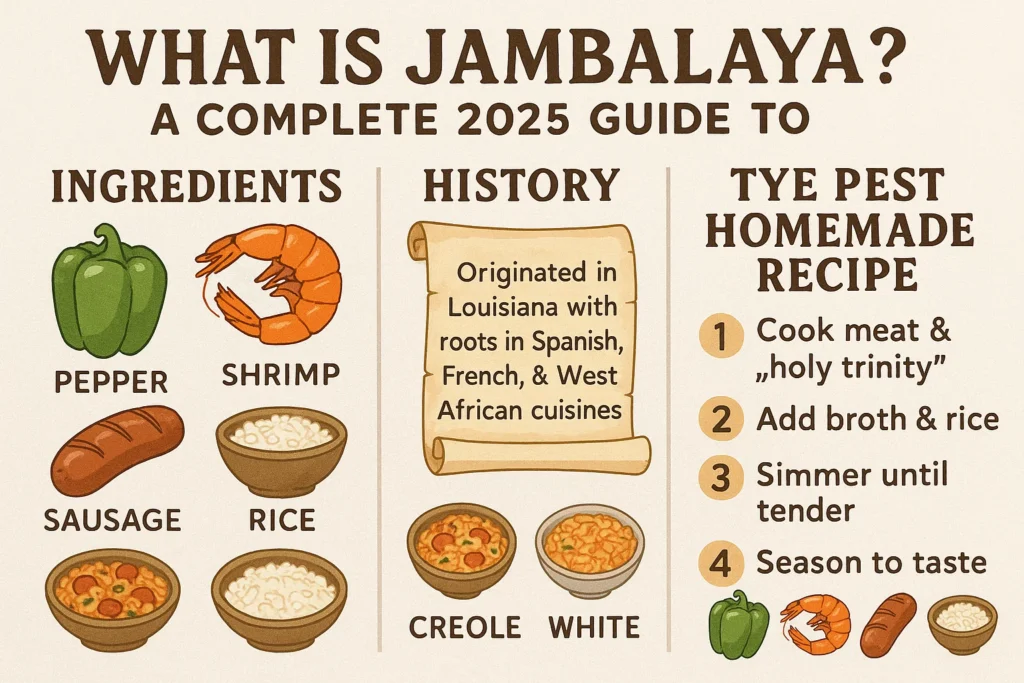

Jambalaya is one of the most iconic dishes in Louisiana cuisine, loved for its rich flavors, one-pot cooking style, and comforting texture. It combines meat, vegetables, spices, and rice into a flavorful dish that is both hearty and satisfying. With roots in Cajun, Creole, French, African, and Spanish influences, Jambalaya carries deep cultural meaning and an unforgettable taste.
This complete 2025 guide explains everything you need to know:
✓ What jambalaya actually is
✓ Cajun vs. Creole styles
✓ Authentic ingredients
✓ Step-by-step cooking procedure
✓ Variations (seafood, chicken, sausage, vegan)
✓ Pro Chef Tips
✓ Storage & reheating methods
✓ Perfect serving ideas
By the end, you will confidently prepare a restaurant-quality jambalaya at home.
H2: The Origins & Cultural History of Jambalaya
Jambalaya’s history is a blend of several cultures that lived together in Louisiana. The dish evolved over centuries as communities mixed their culinary traditions.
Spanish Influence
Spanish settlers brought paella, which used rice, saffron, meat, and vegetables. Since saffron was not easily available in America, cooks replaced it with local spices — creating a new flavor identity.
French Influence
French immigrants added their classic cooking techniques, such as slow sautéing, layering flavors, and using herbs like thyme and bay leaves.
African Influence
African cooks brought spices, bold flavor profiles, and the tradition of making one-pot rice dishes.
Native American Influence
Native tribes introduced local herbs and ingredients like filé powder, smoked meats, and seasonings.
Cajun & Creole Communities
Jambalaya became a staple in both cultures.
Cajun = rustic, smoky, countryside style
Creole = city style, rich, tomato-based
This mixture of heritage created the jambalaya we know today — flavorful, dynamic, and deeply soulful.
H2: Cajun vs. Creole Jambalaya — What’s the Difference?
Many people confuse the two, but the differences are very clear:
Cajun Jambalaya
No tomatoes
Darker in color
Smoky flavor from sausage
Cooked in countryside Cajun communities
Uses chicken, sausage, or pork
More rustic and earthy
Cajun jambalaya gets its color from the browned meat and the deep caramelized “trinity.”
Creole Jambalaya
Contains tomatoes
Reddish in color
Usually includes shrimp
Created in New Orleans (Creole culture)
Slightly sweeter because of tomatoes
More complex and layered
Because tomatoes were widely used in Creole kitchens, Creole jambalaya is sometimes known as “red jambalaya.”
H2: Essential Ingredients for Authentic Jambalaya (2025 Fresh Guide)
A great jambalaya relies on quality ingredients and correct proportions. These are the must-have components:
- Meat
✓ Chicken (thighs recommended for juiciness)
✓ Smoked sausage (Andouille is traditional)
✓ Shrimp (for Creole style)
Optional: pork shoulder, turkey sausage, or smoked ham.
- The Holy Trinity
This is the base of Louisiana cooking:
Onion
Celery
Bell pepper
It works like the flavor foundation of gumbo, étouffée, and jambalaya.
- Rice
Use long-grain rice.
Short-grain becomes mushy, and basmati changes the flavor profile.
- Spices & Seasonings
Paprika
Cayenne pepper
Thyme
Oregano
Garlic
Black pepper
Bay leaves
Pre-made Cajun seasoning can also be used, but homemade gives better control.
- Liquids
Chicken broth or stock
Crushed tomatoes (for Creole style)
H2: Step-by-Step Jambalaya Recipe (Authentic 2025 Method)
Here is the full, detailed cooking guide to make perfect jambalaya at home.
H3: Ingredients (4–6 Servings)
Proteins
1 lb (450g) chicken thighs, diced
1 lb Andouille sausage, sliced
1/2 lb shrimp (optional for Creole style)
Vegetables
1 large onion, chopped
1 cup celery, chopped
1 cup green bell pepper
4 garlic cloves, minced
1 can crushed tomatoes (Creole style only)
Rice & Liquids
2 cups long-grain white rice
4 cups chicken stock
Seasoning
2 tbsp Cajun seasoning
1 tsp thyme
1 tsp paprika
1 tsp black pepper
2 bay leaves
Salt to taste
H3: Cooking Instructions (Detailed)
Step 1: Brown the Meats
Heat oil in a large pot.
Add sausage and cook until browned.
Remove it, then brown the chicken.
This builds deep smoky flavor.
Step 2: Sauté the Holy Trinity
In the same pot:
Add onion, celery, bell pepper.
Cook until soft — around 7 minutes.
Add garlic and seasonings.
Step 3: Add Rice & Toast It
Add raw rice into the pot and stir it with vegetables.
Toasting the rice helps it stay firm and flavorful.
Step 4: Add Stock and Tomatoes
Pour in chicken stock.
(Add tomatoes if making Creole jambalaya.)
Add bay leaves.
Bring to a boil.
Step 5: Cover & Simmer
Lower heat and simmer for 25–30 minutes.
Do not stir too much — it can break the rice.
Step 6: Add Shrimp (Optional)
If using shrimp, add during the last 5 minutes.
Step 7: Rest Before Serving
Turn off the heat.
Let it rest for 10 minutes so flavors absorb.
H2: Jambalaya Variations (2025 Popular Styles)
- Chicken & Sausage Jambalaya
Classic Cajun style, smoky and rich.
- Seafood Jambalaya
Includes shrimp, crab, and sometimes crawfish.
- Creole Red Jambalaya
Tomato-based, slightly sweet, deeply flavorful.
- Pork Jambalaya
Uses pork shoulder or smoked ham.
- Vegetarian / Vegan Jambalaya
Replaces meat with mushrooms, vegan sausage, and vegetable broth.
H2: Pro Chef Tips for Perfect Jambalaya
✔ Do not over-stir
It makes rice mushy.
✔ Use a heavy pot
Prevents burning and gives even cooking.
✔ Brown meat properly
This is the secret behind authentic flavor.
✔ Add shrimp last
Shrimp overcooks easily.
✔ Let it rest
Resting helps rice absorb remaining liquid.
H2: What to Serve With Jambalaya
Cornbread
Garlic bread
Fried okra
Coleslaw
Green salad
Iced tea or lemonade
Jambalaya is a full meal on its own, but these sides enhance the experience.
H2: Storage & Reheating Guide (2025 Updated)
Refrigerator
Store for 3–4 days in an airtight container.
Freezer
Freeze for up to 3 months.
Reheating
Heat on stove or microwave with a splash of broth to keep rice moist.
H2: Nutritional Information (Approx.)
Calories: 480 per serving
Protein: 30g
Carbs: 45g
Fat: 20g
Fiber: 3g
H2: Final Thoughts — Why Jambalaya Is the Best One-Pot Meal of 2025
Jambalaya continues to be one of the most beloved dishes in America and across the world. Its bold spices, warm rice, rich meats, and deep flavors make it perfect for gatherings, festivals, or a cozy family dinner.
Whether you choose Cajun or Creole style, the heart of jambalaya is in its simplicity and soulfulness.
Cooking it at home is easy, fun, and rewarding — and with the guide above, your jambalaya will taste authentic, flavorful, and unforgettable.