
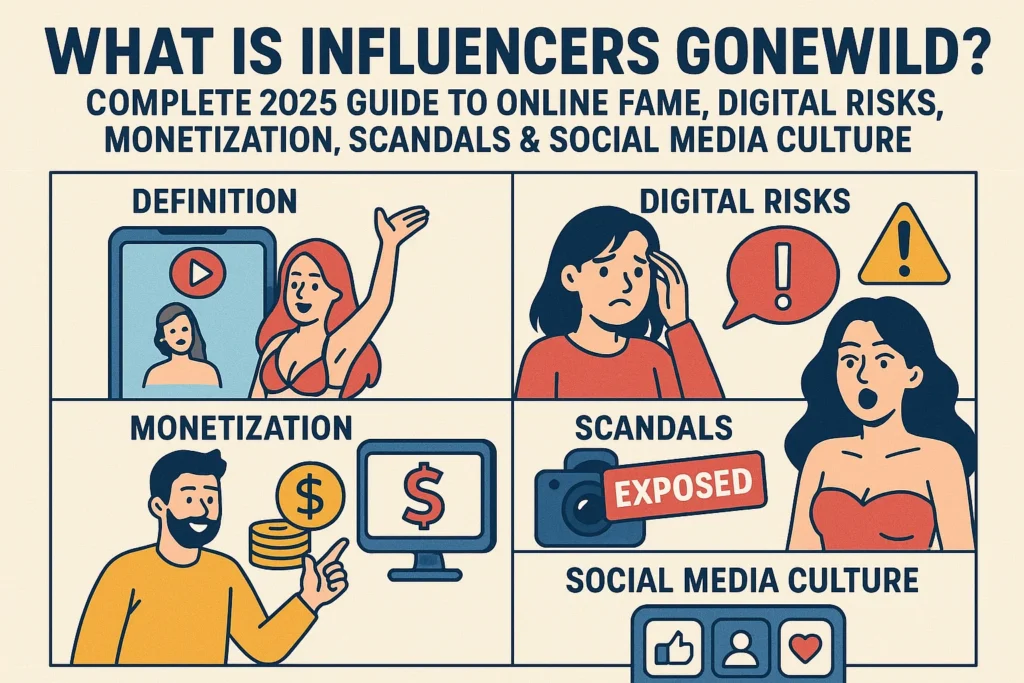

The rise of influencer culture has reshaped the digital world in unimaginable ways. From Instagram models and YouTube creators to TikTok performers and OnlyFans celebrities, influencers today occupy a space that once belonged exclusively to mainstream celebrities. With this rise, a new phenomenon has emerged in internet culture: “Influencers GoneWild.”
This term has become widely used across social platforms, commentary channels, drama forums, and search engines. But despite the popularity of the phrase, many still misunderstand what it truly means, where it comes from, how it works, and why it matters in 2025.
This in-depth 3,000-word guide explores the meaning, origins, cultural relevance, business impact, controversies, privacy issues, monetization models, and future of Influencers GoneWild—all in a clean and educational format.
- Introduction: The Rise of Influencer Culture
Over the past decade, social media has replaced traditional entertainment platforms. Young people no longer rely solely on TV celebrities or movie stars for inspiration. Instead, influencers—regular individuals who gain popularity through content creation—have become the new icons of digital fame.
But with fame comes:
pressure
scrutiny
desire for attention
temptation for viral trends
financial motivations
risks of oversharing
As influencers compete for visibility, some cross lines or engage in sensational content to attract views. This is where the concept of “Influencers GoneWild” begins.
- What Does “Influencers GoneWild” Actually Mean?
“Influencers GoneWild” is an internet term used to describe situations where influencers behave in ways that are:
unexpected
controversial
shocking
overly bold
scandalous
reputation-damaging
unexpected for their public image
Importantly, the term itself does NOT automatically imply explicit adult content.
It mainly refers to influencers behaving outside their usual boundaries.
Examples of “gone wild” behavior include:
public meltdowns
leaked private moments
aggressive rants
wild parties
alcohol or drug-related incidents
reckless challenges
embarrassing livestreams
oversharing personal life
viral controversies
feuds with fans or brands
This content is often captured and circulated widely, leading to viral attention.
- Why Did the Term Become So Popular?
The term became popular for several reasons:
3.1 The shift to short-form content
TikTok, Instagram Reels, and YouTube Shorts encourage quick, dramatic videos. Audiences prefer high-impact content.
3.2 Influencers competing for attention
As millions of creators try to grow, some use outrageous behavior to stand out.
3.3 Drama and controversy attract clicks
Online audiences are drawn to:
shocking moments
“canceled” influencers
scandal breakdowns
Drama = traffic = monetization.
3.4 Rise of commentary channels
YouTubers and TikTok commentators cover controversies in detail, increasing the spread.
3.5 Human curiosity and online voyeurism
People are naturally curious about celebrities’ private or chaotic behavior.
- The Types of Content Associated With Influencers GoneWild
While the phrase covers many categories, the most common ones include:
4.1 Public meltdowns
Influencers crying, yelling, or breaking down on livestreams.
4.2 Viral scandals
Leaked DMs, rude behavior in public, offensive comments, or brand violations.
4.3 Party-related incidents
Footage from clubs, vacations, or behind-the-scenes trips.
4.4 Relationship drama
Breakups, cheating allegations, toxic fights.
4.5 Oversharing personal secrets
Influencers revealing too much for views.
4.6 PR stunts gone wrong
Fake stories, staged pranks, or exaggerated drama.
4.7 Reckless behavior
Dangerous TikTok challenges, illegal stunts, risky trends.
- How Influencers GoneWild Differs From Traditional Celebrity Scandals
Traditional celebrities have:
PR teams
managers
brand restrictions
established media coverage
Influencers, on the other hand:
livestream their daily lives
post instantly
overshare without filtering
handle crises alone
react emotionally online
lack professional guidance
This leads to raw, unfiltered scandals that spread quickly.
- The Psychology Behind “Going Wild” Online
Influencers often experience:
6.1 Fame pressure
Being constantly watched leads to emotional exhaustion.
6.2 Success addiction
Creators become addicted to likes, views, and viral fame.
6.3 Financial temptations
More drama = more traffic = more revenue.
6.4 Social comparison
Creators compare themselves to others and push boundaries for relevance.
6.5 Creator burnout
Burnout leads to impulsive decisions or emotional breakdowns.
- Monetization: Why Influencers Take Risks
Many influencers intentionally lean into controversial content because it generates money.
They earn through:
ads
brand deals
paid shoutouts
exclusive content platforms
TikTok Creator Fund
YouTube monetization
subscriptions
merchandise
Controversy often increases:
follower count
engagement
public attention
This creates a loop where risky behavior becomes profitable.
- How Brands React to Influencers GoneWild Moments
Brands have become extremely cautious.
Most companies:
monitor influencer behavior
cancel deals after scandals
issue public statements
distance themselves from controversies
However, some brands prefer edgy influencers for marketing, especially in:
streetwear
nightlife
music
fitness
gaming
In these niches, wild behavior can even boost brand appeal.
- The Role of Drama Channels & Social Media Algorithms
Drama channels on YouTube and TikTok thrive on influencers “going wild.”
Their content includes:
reaction videos
scandal exposés
breakdowns of viral fights
analysis of leaked videos
influencer reputation commentary
Algorithms boost controversial content because:
it holds attention
it sparks discussions
it increases watch time
it generates interaction
Thus, the system rewards chaos.
- Privacy Issues and Digital Ethics
One of the major concerns around Influencers GoneWild content is privacy.
Common issues include:
clips recorded without consent
private conversations leaked
doxxing
fake rumors
deepfake content
unauthorized screen recordings
fabricated scandals
Influencers often lose control over their own image.
- How Influencers Deal With Controversies
Common strategies include:
11.1 Notes app apologies
A standard format for addressing scandals.
11.2 Livestream explanations
Creators try to clarify events in real time.
11.3 Temporary social media breaks
Used to calm down the backlash.
11.4 Rebranding
Changing their image entirely.
11.5 Legal action
Sending cease-and-desist letters or suing for defamation.
- Case Studies (Non-Explicit, General Examples)
Case Study 1: The TikTok Party Scandal
A group of influencers threw a massive party during lockdown, causing public outrage and losing brand deals.
Case Study 2: The Livestream Breakdown
A beauty influencer cried on livestream after a fight with fans, which went viral.
Case Study 3: The Relationship Drama Explosion
A couple exposed each other online, leading to huge subscriber growth due to the publicity.
Case Study 4: Fitness Influencer’s Public Outburst
A personal trainer yelled at someone in public, and the clip went viral.
- The Impact on Young Audiences
Influencers GoneWild content can affect younger viewers by:
normalizing reckless behavior
encouraging oversharing
glamorizing drama
promoting unrealistic lifestyles
increasing comparison pressure
Parents and educators often worry about these influences.
- The Business Impact for Influencers
While “going wild” may bring short-term fame, it often leads to:
long-term reputation damage
loss of sponsorships
trust issues with fans
mental health challenges
difficulty in rebranding
Some influencers recover; others disappear.
- Why People Watch This Content
Human psychology drives the popularity of such content:
15.1 Curiosity
People want to see the raw side of influencers.
15.2 Emotional connection
Fans feel closer when influencers appear imperfect.
15.3 Entertainment value
Drama is entertaining, similar to reality TV.
15.4 Parasocial relationships
Fans feel personally invested in influencer lives.
15.5 Schadenfreude
Some viewers enjoy seeing influencers fail.
- The Future of Influencers GoneWild in 2025 & Beyond
In 2025, several trends are emerging:
16.1 More livestream scandals
Because livestream content is unfiltered.
16.2 Crowd-sourced drama
Fans create and spread controversies.
16.3 AI-generated influencer scandals
Deepfakes will create false “gone wild” content.
16.4 Stricter social platform rules
Platforms are tightening community guidelines.
16.5 Rise of “clean” influencers
A new wave of creators avoids drama entirely.
16.6 Paid gossip communities
Private groups discussing influencer behavior.
- Should This Content Be Encouraged or Discouraged?
Influencers GoneWild is a double-edged sword.
Benefits
high entertainment value
rapid audience growth
storytelling content
transparency about influencer lives
Risks
mental health harm
online harassment
reputation damage
toxic parasocial behavior
misinformation
loss of opportunities
It must be consumed carefully.
- Tips for Influencers to Avoid “Gone Wild” Scandals
18.1 Never livestream while emotional
Most scandals start this way.
18.2 Avoid oversharing
Some privacy is essential.
18.3 Build a professional PR team
Helps manage crises.
18.4 Stay away from dangerous stunts
Views aren’t worth injuries.
18.5 Think before posting
Everything online is permanent.
18.6 Avoid public fights
They always backfire.
- How Platforms Respond to Influencer Misbehavior
Social platforms often:
suspend accounts
restrict monetization
review content manually
flag problematic videos
require age-restrictions
Policies continue to evolve.
- Conclusion: Influencers GoneWild as a Digital Mirror
Influencers GoneWild reveals the truth about online fame:
It’s unfiltered
It’s messy
It’s unpredictable
It’s emotionally exhausting
It’s driven by audience expectations
This phenomenon is not going away. It is part of the modern internet landscape—fueled by algorithms, attention, and the human desire for entertainment.
As social media continues to evolve, so will the ways influencers express themselves, sometimes positively and sometimes chaotically. But the key lesson remains: digital fame comes with both power and responsibility, and the balance between the two determines an influencer’s long-term success.