
In the age of social media and instant messaging, language evolves quickly. Platforms like Snapchat, Instagram, and WhatsApp don’t just change how we communicate—they also reshape the way we use everyday English phrases. One common point of confusion, especially among non-native English speakers and even many native users, is the difference between:
“Sent you a snap”
“Sent a snap”
At first glance, these phrases seem almost identical. Both involve sending a “snap,” usually referring to a photo or video sent via Snapchat. However, the meaning, tone, grammatical structure, and implied context are slightly different—and those differences matter in real conversations.
This article provides a full, in-depth analysis of both phrases. We’ll explore their meanings, grammar, real-world usage, examples, cultural context, and common mistakes, so by the end, you’ll clearly understand when and how to use each phrase correctly.
What Is a “Snap”?
Before comparing the phrases, it’s important to understand what a “snap” means in modern English.
Definition of a Snap
A snap is a photo or short video sent through the social media app Snapchat. Over time, the word has become a common noun and verb in casual conversation.
Examples:
I took a snap of my coffee.
She snapped a quick video.
In this context, “snap” refers specifically to Snapchat content, not traditional photographs.
Understanding “Sent You a Snap”
Basic Meaning
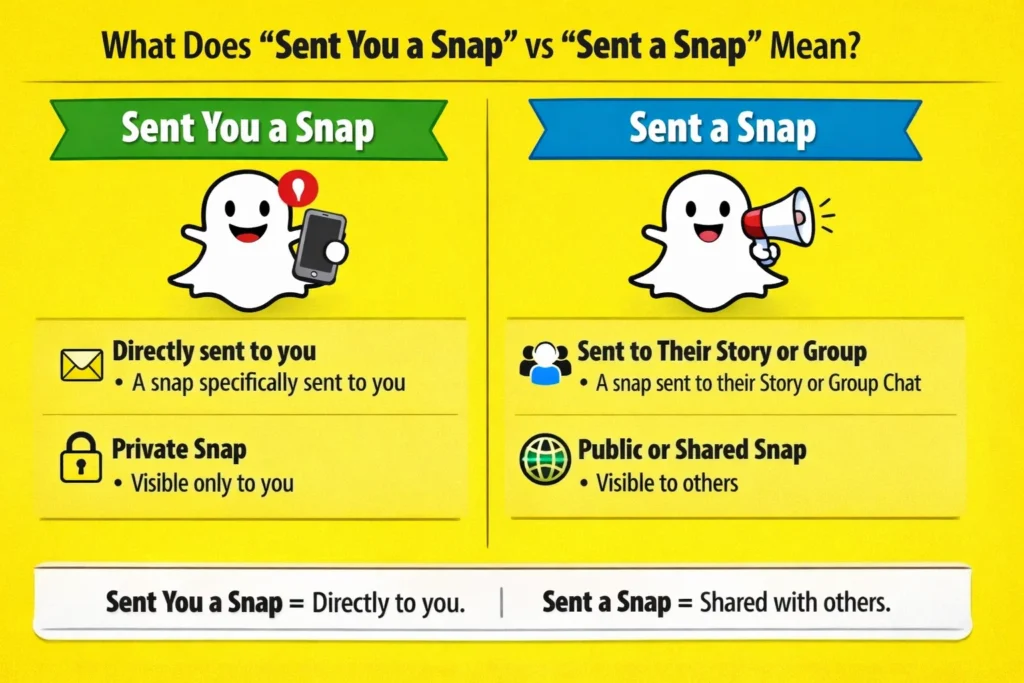
“Sent you a snap” means:
I sent a snap specifically to you.
This phrase clearly identifies the recipient of the snap.
Grammatical Breakdown
Sent → past tense of “send”
You → the recipient
A snap → the object (photo/video)
So grammatically, it follows this structure:
Subject + verb + indirect object + direct object
Example:
I sent you a snap.
Usage of “Sent You a Snap”
- Direct Communication
This phrase is commonly used when talking directly to the person who received the snap.
Example:
Hey, I sent you a snap—did you see it?
- Emphasis on the Recipient
The phrase emphasizes who received the snap, not just that a snap was sent.
Example:
I sent you a snap, not him.
- Common in Casual Speech
“Sent you a snap” is natural, conversational, and widely used in texting and online chat.
Understanding “Sent a Snap”
Basic Meaning
“Sent a snap” means:
I sent a snap (to someone), but the recipient is not specified.
The focus is on the action, not the recipient.
Grammatical Breakdown of “Sent a Snap”
Sent → past tense verb
A snap → object
Recipient → implied or omitted
Structure:
Subject + verb + direct object
Example:
I sent a snap earlier.
Usage of “Sent a Snap”
- General Statements
Used when the recipient is either obvious from context or not important.
Example:
I was busy, but I sent a snap.
- Talking About Activity, Not the Person
The phrase highlights what you did, not who received it.
Example:
I sent a snap during the concert.
- Storytelling or Summarizing
Often used when narrating events.
Example:
I woke up late, grabbed coffee, and sent a snap.
Key Difference Between the Two Phrases
Aspect Sent You a Snap Sent a Snap
Recipient Clearly specified Not specified
Focus On the person On the action
Tone More personal More general
Common Use Direct messages Narration or summary
Context Matters: When Each Phrase Is Better
When to Use “Sent You a Snap”
Use this phrase when:
You are talking to the recipient
You want to emphasize that they received it
You’re checking if they saw it
Examples:
I sent you a snap last night.
Did you get the snap I sent you?
When to Use “Sent a Snap”
Use this phrase when:
The recipient is already known
You’re speaking generally
You’re describing past actions
Examples:
I sent a snap and then logged off.
She sent a snap from the airport.
Tone and Emotional Implications
“Sent You a Snap” Sounds More Personal
This phrase often carries a sense of intentionality or connection.
Example:
I sent you a snap because I missed you.
“Sent a Snap” Sounds Neutral
This phrase is more casual and emotionally neutral.
Example:
I sent a snap of the food.
Native Speaker Preferences
Native English speakers instinctively choose between these phrases based on context.
Direct conversation → “Sent you a snap”
Storytelling → “Sent a snap”
Neither phrase is wrong; it’s about appropriateness.
Common Mistakes Learners Make
- Omitting “You” When It’s Needed
Incorrect:
I sent a snap. Did you see it?
Correct:
I sent you a snap. Did you see it?
- Overusing “Sent You a Snap”
Sometimes the shorter version is more natural.
Example:
I sent a snap on my way home. ✔️
- Confusing Tense or Structure
Incorrect:
I have send you a snap.
Correct:
I have sent you a snap.
Variations and Similar Phrases
Common Alternatives
I snapped you.
I sent you something on Snapchat.
I dropped you a snap.
I sent a snap earlier.
Each variation has slightly different tone but similar meaning.
“Sent You a Snap” in Texting Culture
In texting, brevity matters. However, clarity is still important.
Example:
Sent you a snap 📸
This short message still clearly identifies the recipient.
“Sent a Snap” in Social Media Narratives
This phrase is common in captions and stories.
Example:
Sent a snap before the show started.
Regional and Cultural Usage
Both phrases are used globally, especially among younger users. However:
Non-native speakers often prefer “sent you a snap” because it’s clearer
Native speakers use both, depending on flow
Is One Phrase More Correct Than the Other?
No. Both are grammatically correct.
The difference is not about correctness, but about:
Clarity
Context
Emphasis
SEO and Digital Language Evolution
Search engines increasingly recognize conversational queries like:
What does “sent you a snap” mean?
Sent a snap vs sent you a snap
This reflects how digital communication shapes modern English.
Practical Examples in Conversations
Example 1: One-on-One Chat
I sent you a snap last night.
Example 2: Group Conversation
I sent a snap to the group.
Example 3: Storytelling
I sent a snap and went to sleep.
Which Phrase Should You Use?
Ask yourself:
Am I talking to the person who received it?
Do I want to emphasize them?
Is the recipient important?
If yes → Sent you a snap
If no → Sent a snap
Final Comparison Summary
“Sent you a snap” = personal, direct, recipient-focused
“Sent a snap” = general, neutral, action-focused
Both phrases are essential parts of modern digital English.
Conclusion
The difference between “sent you a snap” and “sent a snap” may seem small, but it reflects a deeper understanding of English structure, tone, and context. In social media communication, choosing the right phrase can make your message clearer, more natural, and more engaging.
Mastering these small distinctions helps you sound more fluent, confident, and accurate in everyday English—especially in the fast-moving world of online conversation.