
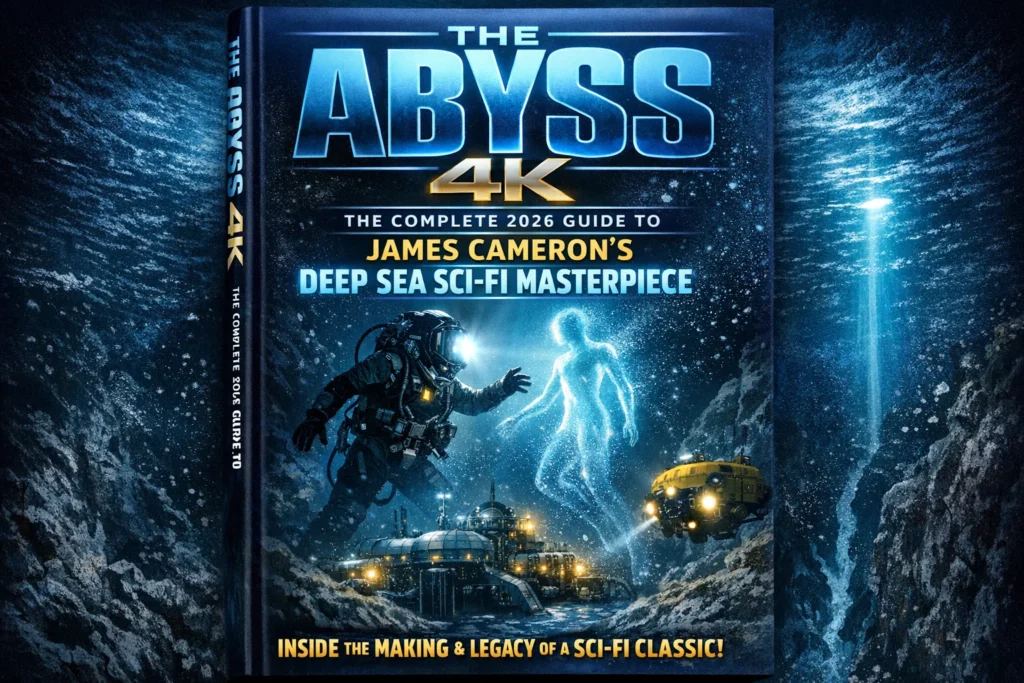

The re-release of The Abyss in stunning 4K resolution marks one of the most anticipated restorations in cinema history. Directed by legendary filmmaker James Cameron, this deep-sea science fiction epic has long been praised for its groundbreaking visual effects, emotional storytelling, and technical ambition.
For decades, fans waited patiently for a high-quality home release that truly captured the film’s visual depth and underwater brilliance. Now, with the 4K remaster, The Abyss has been reborn—offering modern audiences a chance to experience it like never before.
This comprehensive guide explores everything you need to know about The Abyss 4K—from its history and restoration process to its impact on cinema and why it remains a masterpiece in 2026.
The Original Film A Brief Overview
Released in 1989, The Abyss is a science fiction thriller that blends deep-sea exploration with extraterrestrial mystery. The story follows a civilian oil drilling crew recruited by the U.S. Navy to help recover a lost nuclear submarine.
Key Cast
Ed Harris as Bud Brigman
Mary Elizabeth Mastrantonio as Lindsey Brigman
Michael Biehn as Lt. Coffey
The film quickly became known for:
Its intense underwater sequences
Emotional character-driven narrative
Revolutionary CGI (especially the “water tentacle” scene)
Why The Abyss Took So Long to Get a 4K Release
Despite being a classic, The Abyss was notoriously absent from Blu-ray and 4K formats for years. The main reasons included:
Technical Complexity
The film was shot in extreme underwater conditions, making restoration difficult. Original film elements required careful handling and scanning.
Director Involvement
James Cameron is known for personally supervising his film restorations. His involvement delayed the release—but also ensured top-tier quality.
Visual Effects Challenges
Early CGI elements needed modern enhancement without losing authenticity.
The 4K Restoration Process
The 4K remaster of The Abyss is not just an upgrade—it’s a complete transformation.
Film Scanning
The original 35mm negatives were scanned at high resolution, revealing details never seen before.
Color Grading
The underwater scenes now feature:
Deeper blues
Better contrast
Enhanced visibility
HDR Implementation
High Dynamic Range (HDR) brings out:
Subtle lighting in deep-sea environments
Realistic skin tones
Improved shadow detail
Sound Remastering
The audio was upgraded to modern formats like Dolby Atmos, immersing viewers in:
Ocean pressure sounds
Submarine vibrations
Environmental tension
Visual Improvements in 4K
Watching The Abyss in 4K is a completely different experience.
Crystal-Clear Underwater Scenes
The murky visuals of older versions are replaced with:
Sharp textures
Visible particles in water
Enhanced realism
Improved CGI
The famous water tentacle scene looks:
Smoother
More integrated
Less dated
Lighting and Detail
You can now see:
Facial expressions clearly
Equipment details
Subtle environmental effects
The Special Edition vs Theatrical Cut
One of the biggest highlights of the 4K release is the inclusion of both versions:
Theatrical Cut
Shorter runtime
Focus on action and suspense
Special Edition
Extended scenes
Deeper emotional storytelling
Expanded alien storyline
Most fans prefer the Special Edition, as it fully represents Cameron’s vision.
The Legacy of The Abyss
The Abyss is more than just a film—it’s a milestone in cinematic history.
Pioneering CGI
The film introduced early CGI techniques that influenced:
Terminator 2: Judgment Day
Avatar
Underwater Filmmaking Innovation
Cameron built massive water tanks and used real underwater filming techniques.
Emotional Depth
Unlike typical sci-fi films, The Abyss explores:
Human relationships
Trust and fear
Survival under pressure
James Cameron’s Vision
Director James Cameron is known for pushing technological boundaries. With The Abyss, he aimed to:
Create a realistic underwater world
Blend science fiction with human drama
Experiment with new visual effects
His dedication resulted in:
One of the most difficult shoots in Hollywood history
A film that still feels relevant decades later
Behind the Scenes Challenges
Filming The Abyss was extremely difficult.
Underwater Filming
Actors spent hours submerged, leading to:
Physical exhaustion
Safety risks
Cast Tensions
The intense environment caused stress among cast and crew.
Technical Issues
Equipment failures and water pressure added complexity.
Despite these challenges, the final result was groundbreaking.
Why The Abyss 4K Matters in 2026
The 4K release is important because:
Preservation of Cinema
Classic films deserve modern restoration to stay relevant.
New Audience Reach
Younger viewers can now experience the film in top quality.
Technological Showcase
It demonstrates how older films can be enhanced with modern tools.
Comparison: Old vs 4K Version
Feature
Original Version
4K Remaster
Resolution
Standard/HD
Ultra HD
Color
Flat
Rich & vibrant
Sound
Stereo
Dolby Atmos
Visual Effects
Early CGI
Enhanced CGI
Detail
Limited
Highly detailed
Fan Reactions
Fans and critics have praised the 4K release for:
Faithful restoration
Improved clarity
Emotional impact
Many consider it one of the best 4K upgrades ever.
Where to Watch The Abyss 4K
The film is now available on:
4K Ultra HD Blu-ray
Digital streaming platforms
Availability may vary by region, but global access continues to expand.
Impact on Modern Sci-Fi
The Abyss influenced many modern films, including:
Interstellar
Gravity
Its themes of isolation, exploration, and human resilience remain relevant.
Is The Abyss Worth Watching in 4K
Absolutely. Whether you’re a longtime fan or a new viewer, the 4K version offers:
A visually stunning experience
Deep emotional storytelling
Historical significance
It’s not just a movie—it’s an experience.
Conclusion
The 4K remaster of The Abyss is a triumph of modern restoration. With enhanced visuals, immersive audio, and preserved storytelling, it finally delivers the film as James Cameron originally envisioned.
In 2026, The Abyss stands as a reminder that great cinema never fades—it evolves. The film’s journey from a groundbreaking 1989 release to a breathtaking 4K masterpiece proves its timeless appeal.