

As the world shifts toward renewable energy, solar power generators have become one of the most practical and eco-friendly power solutions available today. Whether you’re preparing for power outages, planning off-grid living, camping outdoors, or simply reducing electricity bills, solar generators offer a clean, quiet, and reliable alternative to traditional fuel-based generators.
Unlike gas or diesel generators, solar power generators use energy from the sun—making them sustainable, low-maintenance, and safe for indoor and outdoor use. In this comprehensive guide, we’ll cover what solar power generators are, how they work, their types, benefits, applications, limitations, buying tips, and future trends.
What Is a Solar Power Generator?
A solar power generator is a portable or stationary system that converts sunlight into electricity and stores it in a battery for later use. It does not burn fuel and produces zero emissions during operation.
Main Components
Solar panels
Charge controller
Battery storage
Inverter
Output ports (AC, DC, USB)
Together, these components allow users to generate, store, and use solar electricity anytime.
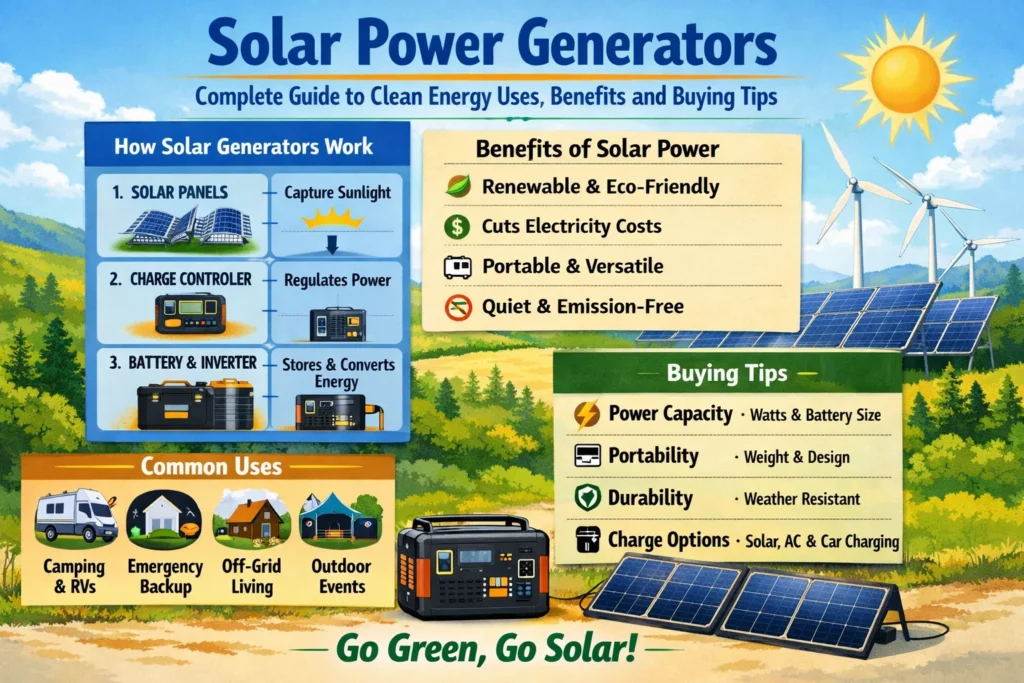
How Solar Power Generators Work
The working process is simple and efficient:
Solar panels capture sunlight
Charge controller regulates voltage
Battery stores the energy
Inverter converts DC to AC power
Devices are powered via output ports
This system works silently and automatically as long as sunlight is available.
Types of Solar Power Generators
- Portable Solar Power Generators
These are compact and easy to carry.
Best for:
Camping
Outdoor events
Emergency backup
Small appliances
- Home Backup Solar Generators
Designed to support essential household appliances.
Best for:
Power outages
Home offices
Medical equipment
- Off-Grid Solar Generator Systems
Larger systems designed for continuous power.
Best for:
Remote cabins
Rural homes
RV living
- Hybrid Solar Generators
Combine solar charging with wall or vehicle charging.
Best for:
Fast charging needs
Unpredictable weather conditions
Key Features of Solar Power Generators
Battery Capacity
Measured in watt-hours (Wh). Higher capacity means longer power supply.
Power Output
Measured in watts (W). Determines what devices can be powered.
Charging Options
Solar panels
Wall outlet
Car charger
Port Variety
AC outlets
USB ports
DC ports
Portability
Weight, handle design, and compact size matter.
Benefits of Solar Power Generators
- Renewable and Eco-Friendly
No emissions, no fuel, no pollution.
- Quiet Operation
Perfect for indoor use and noise-sensitive environments.
- Low Maintenance
No oil changes, no engine repairs.
- Cost-Effective Over Time
No fuel costs; sunlight is free.
- Safe for Indoor Use
No carbon monoxide risk.
Common Uses of Solar Power Generators
Emergency Backup Power
Power outages
Natural disasters
Storm preparedness
Outdoor Activities
Camping
Hiking
Fishing
Tailgating
Home and Office Use
Laptops
Routers
Lights
Fans
Medical Devices
CPAP machines
Oxygen concentrators
RV and Van Life
Refrigerators
Microwaves
Water pumps
Solar Power Generator vs Gas Generator
Feature Solar Generator Gas Generator
Fuel Sunlight Gasoline
Noise Silent Loud
Emissions None High
Maintenance Very low High
Indoor Use Safe Dangerous
Running Cost Free Expensive
Solar generators are clearly superior for long-term sustainability.
Limitations of Solar Power Generators
Despite many advantages, they have limitations:
Weather Dependency
Cloudy days reduce charging efficiency.
Initial Cost
Higher upfront investment than small gas generators.
Charging Time
Solar charging takes longer than fuel refilling.
Power Limits
Not ideal for heavy industrial machinery.
Battery Types Used in Solar Generators
Lithium-Ion Batteries
Lightweight
Fast charging
Long lifespan
Lithium Iron Phosphate (LiFePO4)
Extremely durable
Safer
Longer cycle life
Lead-Acid Batteries
Heavier
Shorter lifespan
Lower cost (less common now)
How to Choose the Right Solar Power Generator
- Calculate Power Needs
List devices and total watt usage.
- Decide Capacity
Choose based on runtime requirements.
- Consider Portability
Travel vs home use.
- Check Expandability
Some systems allow extra panels or batteries.
- Review Safety Features
Overload protection
Temperature control
Surge protection
Solar Panel Efficiency and Placement
Panel Types
Monocrystalline (most efficient)
Polycrystalline
Thin-film
Best Placement Tips
Direct sunlight
Correct angle
No shading
Efficient placement increases charging speed significantly.
Charging Time Explained
Charging depends on:
Sunlight intensity
Panel wattage
Battery size
Example:
500Wh battery with 100W panel = 5–7 hours (ideal sun)
Solar Power Generators for Home Backup
Essential appliances you can power:
LED lights
Wi-Fi routers
TVs
Fans
Small refrigerators
They are perfect for short to medium outages.
Solar Generators for Camping and Outdoor Use
Why campers love them:
No noise
Lightweight
Rechargeable anywhere
No fuel to carry
They enhance comfort without harming nature.
Environmental Impact of Solar Power Generators
Solar generators help:
Reduce carbon footprint
Lower air pollution
Decrease fossil fuel dependence
They play a key role in global sustainability goals.
Cost of Solar Power Generators
Prices vary by capacity and brand.
Price Range
Small portable units: Affordable
Medium home units: Moderate
Large off-grid systems: Higher investment
Long-term savings offset initial cost.
Maintenance Tips
Keep panels clean
Store batteries properly
Avoid overloading
Update firmware (if applicable)
Minimal care ensures long life.
Safety Tips
Use certified cables
Avoid water exposure
Don’t overload outlets
Store in cool, dry place
Solar generators are generally very safe.
Future of Solar Power Generators
The future looks promising with:
Higher efficiency panels
Faster charging
Smarter energy management
Lower costs
Wider adoption
They will play a major role in energy independence.
Solar Power Generators and Energy Independence
Using solar generators reduces reliance on:
Power grids
Fuel supplies
Rising electricity costs
They empower users with self-sufficient energy.
Who Should Use Solar Power Generators?
Ideal for:
Homeowners
Campers
RV owners
Disaster-prepared individuals
Eco-conscious users
Almost anyone can benefit.
FAQs About Solar Power Generators
Can solar generators run refrigerators?
Yes, depending on capacity.
Do they work at night?
Yes, using stored battery power.
Are they worth the cost?
Yes, especially long-term.
How long do batteries last?
5–15 years depending on type.
Conclusion
Solar power generators are transforming how we think about electricity. They offer a clean, silent, and reliable power solution for homes, outdoor adventures, and emergency situations. While they require an initial investment, their long-term benefits—cost savings, environmental protection, and energy independence—make them a smart choice.
As technology advances and renewable energy adoption grows, solar generators will become even more efficient, affordable, and essential. Whether you’re preparing for emergencies or embracing a greener lifestyle, a solar power generator is a powerful step toward a sustainable future.