
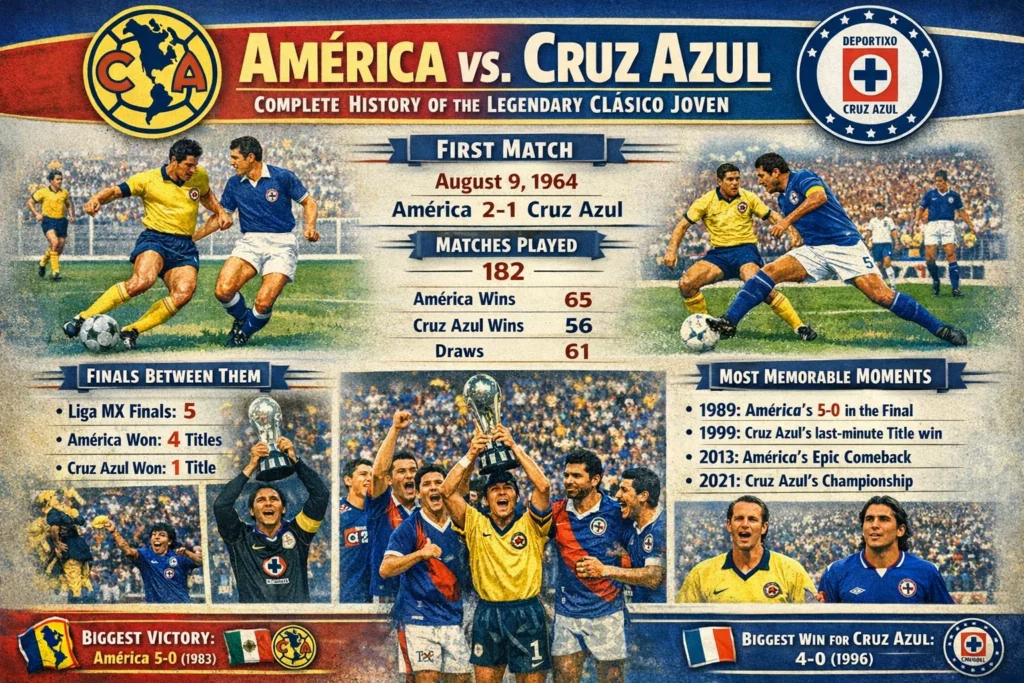

Few football rivalries in Latin America match the intensity, passion, and historical weight of América vs. Cruz Azul. Known as the Clásico Joven, this iconic matchup is one of the most anticipated fixtures in Liga MX, capturing the attention of millions of fans not only in Mexico but across the world.
Although both clubs are based in Mexico City, their contrasting identities, fan cultures, and historical journeys have fueled a rivalry that goes far beyond ninety minutes on the pitch. Every América vs. Cruz Azul encounter carries drama, controversy, unforgettable goals, and emotional moments that define Mexican football.
This article offers a complete 3,000-word deep dive into the América vs. Cruz Azul rivalry, covering its history, origins, memorable matches, tactical battles, star players, fan culture, statistics, and why this rivalry continues to dominate Liga MX.
What Is América vs. Cruz Azul?
América vs. Cruz Azul is a football rivalry between:
Club América, one of the most successful and popular clubs in Mexico
Cruz Azul, one of the country’s most historic and traditionally powerful teams
The rivalry is called Clásico Joven (The Young Derby) because it emerged later than older Mexican rivalries like América vs. Chivas. Despite being “young,” it has grown into one of the fiercest and most meaningful rivalries in the region.
Origins of the Clásico Joven
Club América Background
Founded in 1916, Club América represents power, success, and dominance. Owned for decades by media giant Televisa, América has often been seen as the club of privilege and influence.
Key traits of América:
Record Liga MX titles
Massive nationwide fanbase
Reputation for winning at all costs
Cruz Azul Background
Cruz Azul was founded in 1927 and is historically linked to the working class, as it originated from a cement factory cooperative.
Key traits of Cruz Azul:
Strong working-class identity
Loyal and passionate supporters
Known for discipline and resilience
Birth of the Rivalry
The rivalry truly ignited in the 1970s, when both clubs became dominant forces in Mexican football. As they began to meet regularly in finals and decisive matches, tension grew rapidly.
The contrast between:
América’s elite image
Cruz Azul’s humble roots
created a natural and emotional rivalry that still burns today.
Why América vs. Cruz Azul Is So Intense
Several factors contribute to the intensity of the Clásico Joven:
Same City Rivalry – Both clubs are based in Mexico City
Frequent Finals – They have met multiple times in Liga MX finals
Opposite Identities – Wealth vs. working class
Large Fanbases – Millions of supporters on both sides
Media Attention – Heavy coverage amplifies pressure
Each match feels like a final, regardless of league position.
Historic Matches That Defined the Rivalry
1971–72 Liga MX Final
Cruz Azul defeated América to claim the league title, marking the beginning of true hostility between the clubs.
1988–89 Final
One of the most painful defeats for Cruz Azul, as América dominated the final series and reinforced its reputation as a big-game club.
2013 Clausura Final (The Most Iconic Match)
This final is considered the greatest América vs. Cruz Azul match ever.
Cruz Azul was seconds away from winning the title
América equalized in stoppage time
América won on penalties
This match traumatized Cruz Azul fans and elevated América’s legend.
2018 Apertura Final
Cruz Azul finally got revenge by defeating América in the final, breaking years of heartbreak and restoring pride to their supporters.
América vs. Cruz Azul Head-to-Head Record
While statistics change over time, historically:
América has a slight edge in total wins
Cruz Azul has fewer wins but crucial final victories
Draws are extremely common
The balance makes every new match unpredictable and thrilling.
Tactical Battles: How the Teams Play
Club América’s Playing Style
Traditionally, América is known for:
Attacking football
Fast wingers
Creative midfielders
High pressing
They often dominate possession and look to impose their style early.
Cruz Azul’s Playing Style
Cruz Azul is famous for:
Defensive discipline
Strong midfield structure
Counter-attacking football
Physical intensity
They focus on organization and patience, waiting for mistakes.
Iconic Players in América vs. Cruz Azul History
Club América Legends
Cuauhtémoc Blanco – Symbol of passion and leadership
Carlos Reinoso – Creative genius
Henry Martín – Modern-era goal machine
Cruz Azul Legends
Carlos Hermosillo – Historic goal scorer
Christian Giménez – Midfield leader
Julio César Domínguez – Defensive icon
These players defined generations of the rivalry.
Fan Culture and Stadium Atmosphere
América Fans
Nationwide presence
Loud, confident, and provocative
Famous for yellow and blue colors
Cruz Azul Fans
Deeply loyal
Emotional and long-suffering
Known for resilience and hope
Estadio Azteca: Shared Battlefield
Both teams play at Estadio Azteca, making this rivalry unique:
No “home” advantage
Stadium divided by colors
Electric atmosphere
Media, Pressure, and Controversy
América vs. Cruz Azul matches often feature:
Controversial refereeing decisions
Heated arguments
Red cards
Dramatic last-minute goals
Mexican sports media amplifies every moment, increasing pressure on players and coaches.
América vs. Cruz Azul in Playoffs
Playoff matches between these clubs are especially intense because:
Eliminations hurt more
Titles are at stake
Memories last forever
Many fans remember playoff defeats for decades.
Psychological Impact of the Rivalry
On Players
Young players feel extreme pressure
Veterans are judged by derby performances
One mistake can define a career
On Fans
Victories bring months of pride
Defeats cause lasting pain
Bragging rights matter deeply
This emotional weight makes the rivalry legendary.
Recent Matches and Modern Era
In recent seasons:
Both clubs remain title contenders
Tactical sophistication has increased
Younger international players have joined
Despite modernization, the rivalry’s intensity remains unchanged.
América vs. Cruz Azul: Global Popularity
The Clásico Joven is followed by:
Mexican fans in the USA
Latin American audiences
International football enthusiasts
Broadcast worldwide, it represents Liga MX on the global stage.
Why the Rivalry Still Matters Today
Even after decades, América vs. Cruz Azul remains relevant because:
Both clubs continue to compete for titles
New generations of fans join each year
Past wounds and victories are never forgotten
It is not just a game—it is tradition, pride, and identity.
Comparison with Other Mexican Rivalries
Rivalry Intensity History Titles Impact
América vs. Chivas Very High Older National
América vs. Cruz Azul Extremely High Modern Finals-heavy
Pumas vs. América High Cultural City-based
The Clásico Joven stands out for its dramatic finals.
Key Facts About América vs. Cruz Azul
Known as Clásico Joven
One of Liga MX’s most watched matches
Multiple finals encounters
Shared stadium rivalry
Future of the Rivalry
As Liga MX evolves, América vs. Cruz Azul will continue to:
Produce unforgettable moments
Shape Mexican football culture
Inspire future generations
Technology may change the game, but passion will remain the same.
Frequently Asked Questions (FAQs)
Why is América vs. Cruz Azul called Clásico Joven?
Because the rivalry became intense later than older Mexican derbies.
Who has more titles?
Club América has more Liga MX titles overall.
What is the most famous match?
The 2013 Clausura final is widely considered the most iconic.