
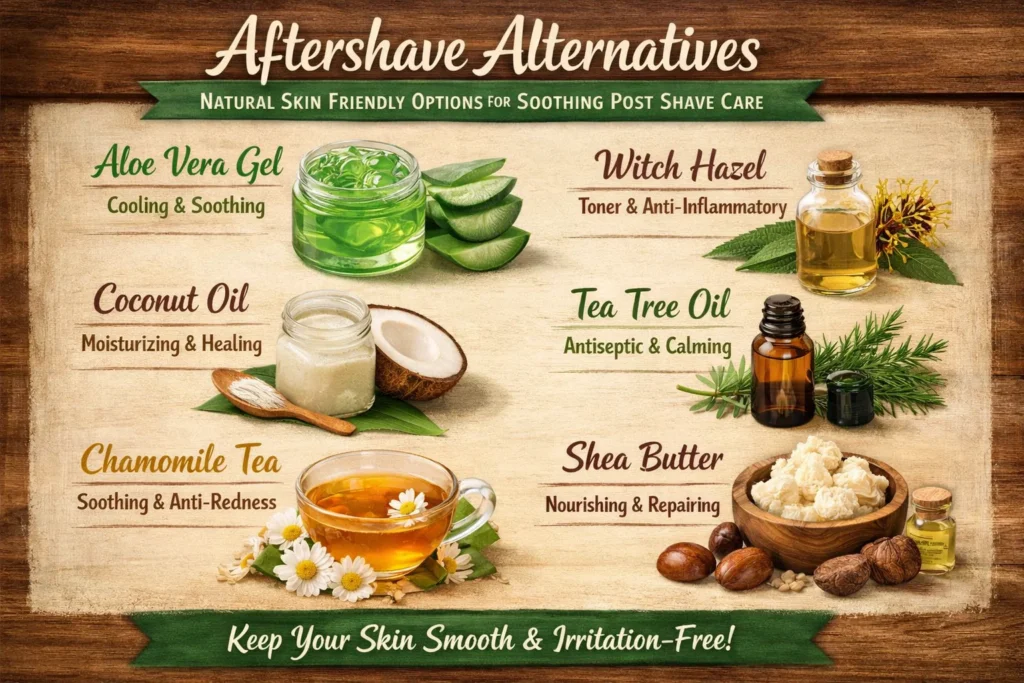

Shaving is a daily routine for many men and women, but the irritation that often follows—redness, razor bumps, burning, dryness, and ingrown hairs—can make the experience uncomfortable. Traditionally, aftershave has been the go-to solution for post-shave care. However, many classic aftershave products contain alcohol, artificial fragrance, and harsh chemicals that can damage sensitive skin.
If you have ever applied aftershave and felt your face sting like fire, you are not alone. Thankfully, there are plenty of aftershave alternatives that work just as well—or even better—at soothing and protecting your skin.
In this guide, we will explore the best natural and modern alternatives to aftershave, how they work, and which options are best for different skin types.
What Is Aftershave and Why Do People Use It?
Aftershave is a liquid or lotion applied after shaving to:
Disinfect minor cuts and nicks
Reduce bacteria and prevent infection
Tighten pores temporarily
Reduce irritation and inflammation
Provide a pleasant scent
Traditional aftershave usually contains alcohol, which kills bacteria and gives a cooling effect. However, alcohol can also dry out skin and worsen irritation, especially for people with sensitive or acne-prone skin.
Why Look for Aftershave Alternatives?
Many people switch from traditional aftershave to alternative products because of:
- Alcohol Irritation
Alcohol-based aftershaves can cause:
Burning sensation
Excessive dryness
Peeling skin
Redness
- Sensitive Skin Problems
People with eczema, rosacea, or sensitive skin often find aftershave too harsh.
- Razor Burn and Bumps
Harsh ingredients can worsen razor bumps and ingrown hairs.
- Artificial Fragrance Allergies
Many aftershaves contain synthetic fragrances that can trigger allergies or breakouts.
- Desire for Natural Skin Care
Modern skincare trends emphasize gentle and natural products with skin-healing properties.
What Should a Good Aftershave Alternative Do?
A good post-shave product should provide:
Hydration
Anti-inflammatory soothing
Antibacterial protection
Healing support
Barrier repair
Non-greasy finish
The best alternative depends on your skin type and shaving method.
Best Aftershave Alternatives (Complete List)
Below are some of the most effective and widely used alternatives to traditional aftershave.
- Aloe Vera Gel (One of the Best Natural Alternatives)
Why Aloe Vera Works
Aloe vera is famous for soothing sunburn, but it also works extremely well for razor burn. Aloe contains vitamins, enzymes, and antioxidants that reduce inflammation and help skin heal quickly.
Benefits
Soothes irritation instantly
Reduces redness and razor burn
Moisturizes dry skin
Speeds up healing of small cuts
Lightweight and non-greasy
Best For
Sensitive skin
Dry skin
Razor burn-prone skin
How to Use
Apply a thin layer of pure aloe vera gel after shaving. Let it absorb naturally.
Pro Tip
Choose aloe vera gel that is:
95–100% pure
Alcohol-free
Fragrance-free
- Witch Hazel (The Classic Alcohol-Free Toner)
Why Witch Hazel Works
Witch hazel is a natural astringent derived from plant bark and leaves. It tightens skin gently and reduces inflammation without the harshness of alcohol.
Benefits
Reduces redness and swelling
Controls oil production
Helps prevent razor bumps
Natural antibacterial properties
Calms itching and irritation
Best For
Oily skin
Acne-prone skin
Combination skin
How to Use
Soak a cotton pad with witch hazel and gently pat it on your face or shaved area.
Pro Tip
Look for alcohol-free witch hazel. Some brands still mix it with alcohol.
- Cold Water Rinse (Simple But Powerful)
Why It Works
Cold water helps close pores temporarily, reduce inflammation, and soothe irritated skin.
Benefits
Instant cooling effect
Reduces redness
Tightens skin
Removes leftover shaving cream
Best For
Everyone
People who want a quick and free method
How to Use
After shaving, rinse your face with cold water for 20–30 seconds.
Pro Tip
You can also use a cold damp towel for a barbershop-style finish.
- Moisturizer (Modern Skincare Replacement for Aftershave)
Why Moisturizer Works
Many dermatologists recommend skipping traditional aftershave and applying a gentle moisturizer instead. Shaving removes a thin layer of skin, leaving it exposed. Moisturizers help restore hydration and repair the skin barrier.
Benefits
Prevents dryness and flaking
Reduces irritation
Keeps skin smooth
Helps heal small nicks
Best For
Dry skin
Sensitive skin
Aging skin
Best Ingredients to Look For
Hyaluronic acid
Ceramides
Glycerin
Niacinamide
Shea butter
How to Use
Apply a pea-sized amount after shaving. Massage gently until absorbed.
- Coconut Oil (Natural Moisturizer and Antibacterial)
Why Coconut Oil Works
Coconut oil contains fatty acids and has natural antimicrobial properties.
Benefits
Deep hydration
Protects skin barrier
Helps reduce irritation
Can prevent dryness in winter
Best For
Dry skin
Normal skin
People shaving legs or body areas
Not Ideal For
Oily skin or acne-prone skin (can clog pores)
How to Use
Rub a tiny amount between your hands and apply lightly to shaved skin.
- Shea Butter (Best for Dry and Sensitive Skin)
Why Shea Butter Works
Shea butter is rich in vitamins A and E and provides long-lasting moisture.
Benefits
Repairs skin barrier
Prevents dryness and cracking
Soothes irritation
Excellent for winter shaving
Best For
Very dry skin
Sensitive skin
Shaving body areas
How to Use
Apply a small amount to damp skin after shaving.
- Tea Tree Oil (Great for Razor Bumps and Acne)
Why Tea Tree Oil Works
Tea tree oil is a strong natural antiseptic and antibacterial oil that helps reduce infection and inflammation.
Benefits
Prevents razor bumps
Helps with acne
Reduces ingrown hair irritation
Fights bacteria
Warning
Tea tree oil is powerful and must be diluted before applying.
Best For
Acne-prone skin
Razor bumps
Ingrown hair issues
How to Use
Mix 2–3 drops of tea tree oil with a tablespoon of carrier oil (like jojoba or almond oil). Apply gently.
- Jojoba Oil (Best Lightweight Oil Alternative)
Why Jojoba Oil Works
Jojoba oil is similar to the natural oils produced by human skin, making it one of the best non-greasy options.
Benefits
Lightweight hydration
Non-comedogenic (less likely to clog pores)
Helps balance oily skin
Reduces inflammation
Best For
Oily skin
Combination skin
Sensitive skin
How to Use
Apply 2–3 drops after shaving and massage lightly.
- Rose Water (Gentle, Refreshing, and Fragrant)
Why Rose Water Works
Rose water is soothing and anti-inflammatory, and it also provides a natural refreshing scent.
Benefits
Calms redness
Hydrates lightly
Smells pleasant naturally
Great for sensitive skin
Best For
Sensitive skin
Normal skin
People who want a natural fragrance
How to Use
Spray rose water directly on the face after shaving or apply with cotton.
- Alum Block (Traditional Barber Secret)
What Is an Alum Block?
An alum block is a mineral salt used by barbers for decades. It acts as a natural antiseptic and tightens skin.
Benefits
Stops bleeding from small cuts
Tightens skin and pores
Reduces bacteria
Helps prevent razor bumps
Best For
Men who use safety razors
People who get frequent nicks
How to Use
Wet the alum block and rub it gently over shaved skin. Leave for 30 seconds, then rinse off.
- Apple Cider Vinegar (Strong but Effective)
Why It Works
Apple cider vinegar (ACV) has antibacterial and antifungal properties.
Benefits
Helps prevent infection
Reduces razor bumps
Controls oil
Warning
ACV is acidic and must be diluted.
Best For
Oily skin
People prone to razor bumps
How to Use
Mix 1 part ACV with 3 parts water. Apply lightly with cotton and rinse after a few minutes.
- Cucumber Gel or Cucumber Extract
Why It Works
Cucumber is cooling, hydrating, and reduces puffiness.
Benefits
Calms irritation
Reduces swelling
Hydrates gently
Best For
Sensitive skin
People who shave frequently
How to Use
Use cucumber gel or apply fresh cucumber juice.
- Niacinamide Serum (Modern Skincare Solution)
Why It Works
Niacinamide (Vitamin B3) is one of the best skincare ingredients for reducing redness, repairing skin, and controlling oil.
Benefits
Strengthens skin barrier
Reduces irritation and redness
Helps acne and oil control
Smoothens skin texture
Best For
Acne-prone skin
Sensitive skin
People who shave daily
How to Use
Apply 2–3 drops after shaving, then follow with moisturizer.
- Unscented Aftershave Balm (Better Than Alcohol Aftershave)
If you still want a product labeled “aftershave” but without harsh alcohol, a balm is a great choice.
Benefits
Hydrates and protects
Usually contains soothing ingredients
Less burning sensation
Best For
Dry skin
People who prefer a traditional shaving routine
Aftershave Alternatives for Different Skin Types
Choosing the right alternative depends on your skin type.
Best Alternatives for Sensitive Skin
Aloe vera gel
Rose water
Unscented moisturizer
Shea butter
Jojoba oil
Avoid:
Alcohol products
Strong fragrance
Undiluted essential oils
Best Alternatives for Oily Skin
Witch hazel (alcohol-free)
Niacinamide serum
Tea tree oil (diluted)
Light gel moisturizers
Avoid:
Heavy oils like coconut oil
Thick greasy creams
Best Alternatives for Dry Skin
Shea butter
Coconut oil (small amount)
Ceramide moisturizer
Aloe vera + moisturizer combination
Avoid:
Witch hazel if it feels too drying
ACV solutions
Best Alternatives for Acne-Prone Skin
Witch hazel
Tea tree oil (diluted)
Niacinamide serum
Aloe vera gel
Avoid:
Thick oils that clog pores
Heavy fragrance products
DIY Homemade Aftershave Alternatives (Easy Recipes)
If you enjoy natural skincare, you can make your own aftershave alternatives at home.
DIY Aloe + Rose Water Spray
Ingredients
2 tablespoons aloe vera gel
½ cup rose water
1 teaspoon glycerin (optional)
Instructions
Mix all ingredients in a clean spray bottle.
Shake well before each use.
Spray after shaving and let it dry.
Benefits
Cooling and soothing
Natural fragrance
Great for sensitive skin
DIY Witch Hazel and Aloe Toner
Ingredients
½ cup alcohol-free witch hazel
¼ cup aloe vera juice
3 drops lavender oil (optional)
Instructions
Mix ingredients in a bottle.
Apply with cotton after shaving.
Benefits
Reduces redness
Prevents razor bumps
Refreshing and light
DIY Coconut Oil Balm (For Dry Skin)
Ingredients
1 tablespoon coconut oil
1 tablespoon shea butter
2 drops tea tree oil (optional)
Instructions
Melt coconut oil and shea butter together.
Let it cool and harden.
Apply a small amount after shaving.
Common Post-Shave Problems and Solutions
Here are the most common shaving issues and the best alternatives to fix them.
Razor Burn
Best solutions:
Aloe vera gel
Cold water rinse
Rose water spray
Razor Bumps
Best solutions:
Witch hazel
Tea tree oil (diluted)
Alum block
Dryness After Shaving
Best solutions:
Ceramide moisturizer
Shea butter
Jojoba oil
Ingrown Hairs
Best solutions:
Tea tree oil
Witch hazel
Exfoliation 2–3 times per week
How to Apply Aftershave Alternatives Correctly
Even the best product will not work properly if applied incorrectly.
Step-by-Step Post-Shave Routine
Rinse with warm water to remove shaving cream.
Rinse with cold water to calm skin.
Pat dry with a clean towel (do not rub).
Apply your chosen alternative:
Aloe, witch hazel, toner, or serum
Finish with moisturizer or oil if needed.
Mistakes to Avoid After Shaving
Many people blame aftershave, but the real issue is bad shaving habits.
Common Mistakes
Shaving against the grain aggressively
Using a dull razor
Not using shaving cream or gel
Shaving too fast without preparation
Applying alcohol-based products on sensitive skin
Skipping moisturizer
Best Products That Work Like Aftershave (Without Alcohol)
If you want ready-made alternatives, look for:
Aftershave Balm
Hydrating
Fragrance-free options available
Face Toners
Witch hazel toner
Aloe-based toners
Hydrating Serums
Hyaluronic acid serum
Niacinamide serum
Gentle Moisturizers
Ceramide moisturizer
Lightweight gel moisturizer
Are Aftershave Alternatives Better Than Traditional Aftershave?
In many cases, yes.
Advantages of Alternatives
Less irritation
Better hydration
Suitable for sensitive skin
More skincare benefits
Often fragrance-free
When Traditional Aftershave Might Still Help
If you have very oily skin and rarely experience irritation, traditional aftershave can still work. But even then, alcohol-free options are usually healthier.
How to Choose the Best Aftershave Alternative
Ask yourself these questions:
- Do you have dry skin?
Choose:
Shea butter
Moisturizer
Aloe vera
- Do you get razor bumps?
Choose:
Witch hazel
Alum block
Tea tree oil
- Do you shave daily?
Choose:
Aloe vera gel
Niacinamide serum
Light moisturizer
- Do you want fragrance?
Choose:
Rose water
Light essential oil blend (diluted)
Aftershave Alternatives for Women (Legs, Bikini Area, Underarms)
Aftershave alternatives are not only for men’s faces. Many women shave body areas where irritation is common.
Best Options for Body Shaving
Aloe vera gel (best overall)
Coconut oil (for legs)
Shea butter (for dryness)
Witch hazel (for bikini line)
Tea tree oil (for ingrown hairs, diluted)
Pro Tip
For bikini line irritation, avoid heavy fragrance products and focus on gentle cooling ingredients.
Natural Aftershave Alternatives vs Store-Bought Products
Both can work well, depending on preference.
Natural Alternatives (Pros)
Fewer chemicals
Budget-friendly
Easy DIY recipes
Natural Alternatives (Cons)
Some oils may clog pores
Shelf life may be shorter
Store-Bought Products (Pros)
Longer shelf life
Dermatologist-tested formulas
Store-Bought Products (Cons)
May contain fragrance or preservatives
Higher cost
Frequently Asked Questions (FAQs)
Can I use moisturizer instead of aftershave?
Yes. Many dermatologists recommend moisturizer as the best post-shave product.
Is aloe vera good after shaving?
Absolutely. Aloe vera is one of the best natural options for razor burn and irritation.
Is coconut oil good after shaving?
It can be, especially for dry skin. But oily or acne-prone skin should use it carefully.
Can I use Vaseline after shaving?
Vaseline can lock moisture in but may feel greasy. It works best for extremely dry skin or minor cuts.
What is the best aftershave alternative for razor bumps?
Witch hazel and tea tree oil (diluted) are excellent for razor bumps and ingrown hairs.