
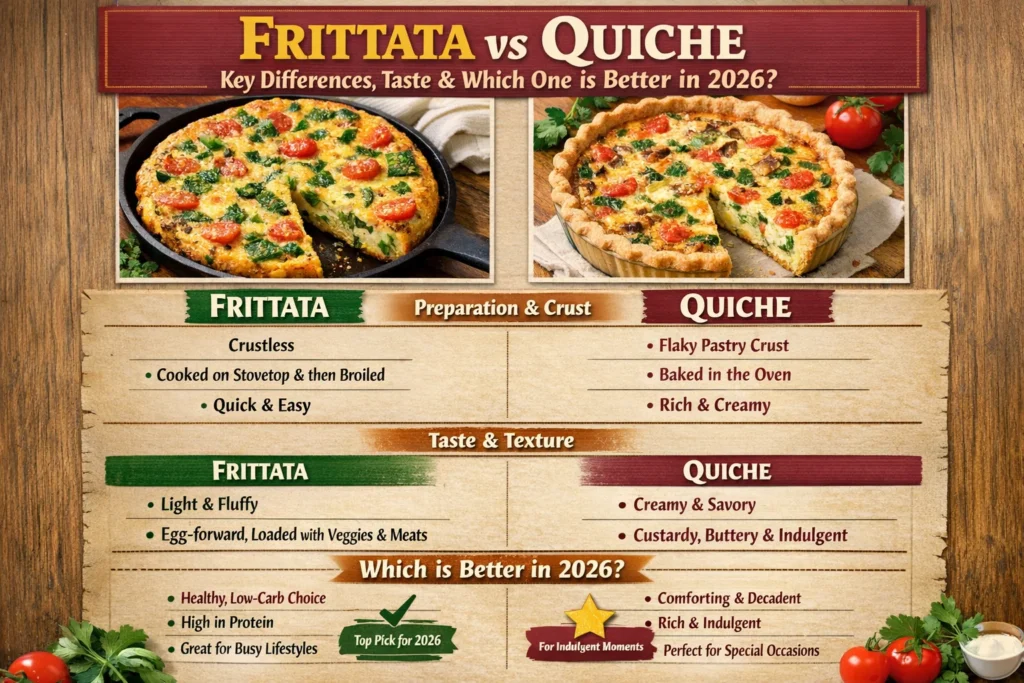

When it comes to egg-based dishes that are both versatile and delicious, two classics often come up: the Italian frittata and the French quiche. At first glance, they may seem quite similar—both are savory, egg-based dishes that can include vegetables, meats, and cheese. However, once you dive deeper, you’ll discover that they differ in preparation, texture, origin, and even the occasions they are best suited for.
In this comprehensive guide, we’ll explore everything you need to know about frittata vs quiche, including their history, ingredients, cooking methods, nutritional differences, and which one might be better for your lifestyle. Whether you’re a home cook, a food blogger, or simply curious, this article will give you a complete understanding.
Origins and History
The Italian Roots of Frittata
The word frittata comes from the Italian verb friggere, meaning “to fry.” Traditionally, this dish was a simple, rustic meal created by Italian households using leftover ingredients. It was designed to be quick, economical, and filling.
Unlike more refined dishes, the frittata was never about presentation—it was about practicality. Farmers and families would use whatever vegetables, meats, or cheeses they had on hand, mix them with eggs, and cook everything in a single pan.
Over time, the frittata evolved into a staple of Italian cuisine and is now enjoyed worldwide, often appearing on brunch menus and in healthy meal plans.
The French Elegance of Quiche
The quiche originates from France, specifically the region of Lorraine. The most famous version is Quiche Lorraine, which traditionally includes eggs, cream, and bacon.
Unlike the rustic nature of the frittata, quiche is considered more refined. It is baked in a pastry crust, giving it a structured, pie-like appearance. Historically, it was a dish enjoyed in French households and later became a symbol of classic European cuisine.
Today, quiche is popular globally and often associated with brunch, cafes, and elegant dining.
Key Differences at a Glance
Feature
Frittata
Quiche
Origin
Italy
France
Crust
No crust
Has pastry crust
Dairy
Minimal or none
Heavy cream/milk
Cooking Method
Stovetop + oven
Oven-baked
Texture
Dense and firm
Soft and custardy
Calories
Lower
Higher
Difficulty
Easy
Moderate
Ingredients Breakdown
Frittata Ingredients
A typical frittata includes:
Eggs (main ingredient)
Vegetables (spinach, onions, peppers)
Meat (optional – chicken, sausage)
Cheese (optional)
Olive oil
The focus is on simplicity and flexibility. You can easily customize a frittata based on what you have in your kitchen.
Quiche Ingredients
Quiche is more structured and typically includes:
Eggs
Heavy cream or milk
Cheese (like Gruyère or cheddar)
Fillings (spinach, mushrooms, bacon)
Pastry crust (shortcrust)
The cream and crust are what make quiche richer and more indulgent compared to frittata.
Cooking Methods
How Frittata is Cooked
Ingredients are sautéed in a skillet.
Beaten eggs are poured over the mixture.
Cooked on the stovetop until partially set.
Finished in the oven or under a broiler.
This method makes it quick and convenient, perfect for busy mornings.
How Quiche is Cooked
A pastry crust is prepared and pre-baked.
Egg and cream mixture is poured into the crust.
Fillings are added.
Baked in the oven until set.
Quiche requires more time and precision, especially to achieve the perfect custard texture.
Texture and Taste
Frittata
Firm and slightly dense
More egg-forward flavor
Less creamy
Slightly crispy edges
Frittata is hearty and satisfying without being overly rich.
Quiche
Soft, creamy, and custard-like
Rich and buttery flavor
Smooth texture
Balanced taste due to cream
Quiche feels more indulgent and luxurious.
Nutritional Comparison
Frittata (Healthier Option)
Lower in calories
High in protein
Less fat (depending on ingredients)
Great for low-carb diets
Frittatas are often preferred by people following keto, low-carb, or high-protein diets.
Quiche (Richer Option)
Higher in calories due to cream and crust
More fat content
More filling but heavier
Quiche is ideal for special occasions rather than daily consumption.
Versatility
Frittata Flexibility
Frittatas are extremely versatile. You can:
Use leftovers
Make it vegetarian or meat-based
Eat it hot or cold
Serve it for breakfast, lunch, or dinner
Quiche Variety
Quiche also offers variety, but within a more structured format:
Classic Quiche Lorraine
Spinach and cheese quiche
Mushroom quiche
Seafood quiche
However, the crust and custard base remain consistent.
Cooking Difficulty
Frittata – Beginner Friendly
Requires minimal skills
No baking expertise needed
Quick preparation
Perfect for beginners or anyone looking for a fast meal.
Quiche – Intermediate Level
Requires pastry preparation
Baking precision needed
Risk of overcooking or soggy crust
Better suited for those with some cooking experience.
When to Choose Frittata vs Quiche
Choose Frittata When:
You want a quick meal
You’re eating healthy
You don’t have much time
You want to use leftovers
Choose Quiche When
You’re hosting guests
You want a rich, indulgent dish
You’re preparing brunch
Presentation matters
Popular Variations
Frittata Variations
Spinach and feta frittata
Potato and onion frittata
Mushroom and cheese frittata
Chicken and vegetable frittata
Quiche Variations
Quiche Lorraine (bacon and cheese)
Spinach quiche
Broccoli cheddar quiche
Salmon quiche
Cultural Significance
The frittata represents simplicity and home cooking in Italy, while the quiche symbolizes French culinary elegance. Both dishes reflect their cultural origins:
Italy → Practical, rustic, flexible
France → Refined, structured, artistic
Storage and Reheating
Frittata
Can be stored in the fridge for 3–4 days
Easy to reheat in a pan or microwave
Maintains texture well
Quiche
Also lasts 3–4 days in the fridge
Best reheated in the oven
Crust may become soggy if microwaved
Cost Comparison
Frittata → Budget-friendly (uses basic ingredients)
Quiche → Slightly expensive (cream, cheese, pastry)
Which One is Better
There is no definitive winner—it depends on your needs.
For health and convenience → Frittata wins
For taste and elegance → Quiche wins
Both dishes are delicious and worth trying.
Conclusion
The debate between Frittata vs Quiche ultimately comes down to personal preference, lifestyle, and occasion.
If you’re looking for something quick, healthy, and easy, the frittata is your best choice. On the other hand, if you want a rich, creamy, and visually impressive dish, quiche is the way to go.
Both dishes showcase how simple ingredients like eggs can be transformed into something extraordinary. Whether you prefer the rustic charm of Italy or the refined elegance of France, there’s no wrong choice—only delicious ones.