
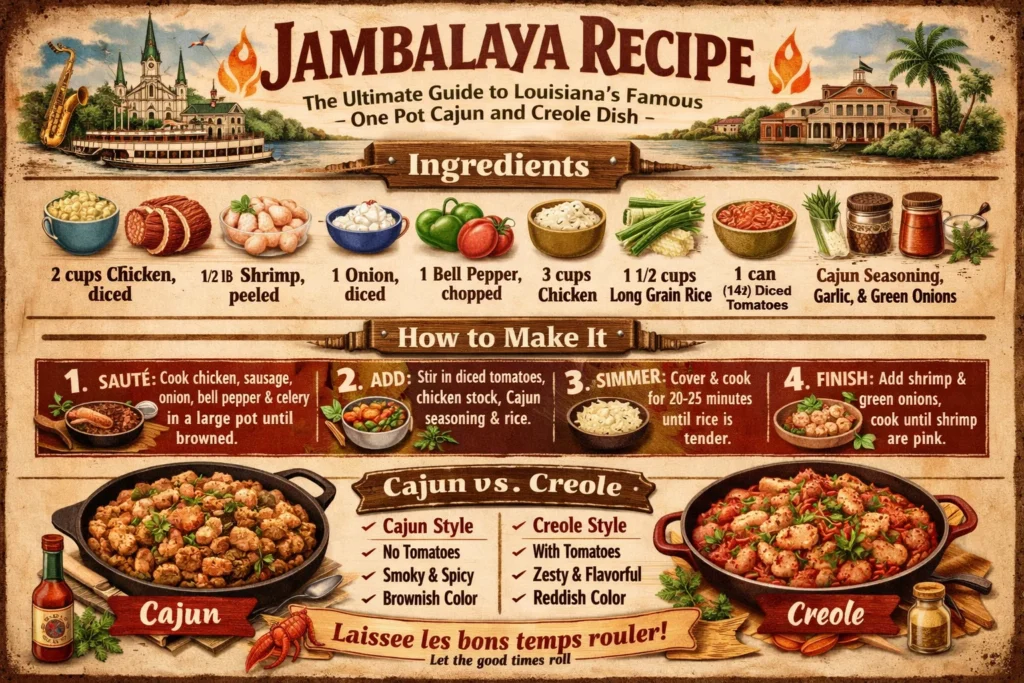

Few dishes represent the rich culinary traditions of Louisiana as perfectly as Jambalaya. This flavorful one-pot meal combines rice, meats, seafood, vegetables, and aromatic spices into a comforting dish that has become a symbol of Southern cooking. Whether served at family gatherings, festivals, or weeknight dinners, jambalaya is loved for its bold flavors and versatility.
Originating in Louisiana, jambalaya reflects the diverse cultural influences of the region. Spanish, French, African, and Caribbean traditions all contributed to the development of this iconic dish. Over time, it evolved into several distinct styles, most notably Cajun jambalaya and Creole jambalaya.
In this complete guide, you will learn:
The fascinating history of jambalaya
Key ingredients and flavor profiles
Differences between Cajun and Creole styles
Step-by-step authentic jambalaya recipe
Variations using chicken, shrimp, sausage, or vegetables
Cooking tips for perfect rice every time
Serving suggestions and storage tips
By the end of this article, you will have everything you need to cook a delicious, authentic jambalaya at home.
The History of Jambalaya
The roots of Jambalaya trace back to the multicultural heritage of New Orleans and southern Louisiana.
Spanish Influence
Many historians believe jambalaya was inspired by the Spanish rice dish Paella. Spanish settlers in Louisiana attempted to recreate paella but substituted local ingredients since saffron was difficult to obtain.
Rice, meats, and seafood were combined in one pot, similar to paella, but with local spices and smoked meats.
French and Creole Influence
French settlers contributed their cooking techniques and flavors. The dish became associated with Creole cuisine, known for its blend of European cooking styles with Caribbean and African ingredients.
Tomatoes were introduced in Creole cooking, which later created a major difference between Creole and Cajun jambalaya.
African Culinary Traditions
African slaves brought rice-cooking traditions that heavily influenced Louisiana cuisine. Their methods of seasoning and cooking rice with meat helped shape what we now know as jambalaya.
Cajun Adaptation
In rural Louisiana, Cajun cuisine evolved among French-Canadian settlers. Their version of jambalaya avoided tomatoes and focused on smoked meats and spices.
Today, both Cajun and Creole styles are widely enjoyed.
Cajun vs Creole Jambalaya
Although both styles share many ingredients, there are some clear differences.
Creole Jambalaya (Red Jambalaya)
Creole jambalaya is often called “red jambalaya” because it includes tomatoes.
Characteristics
Uses tomatoes
Includes seafood such as shrimp
Slightly lighter color
Associated with New Orleans
Common ingredients:
Rice
Shrimp
Chicken
Sausage
Tomatoes
Bell peppers
Onion
Celery
Cajun Jambalaya (Brown Jambalaya)
Cajun jambalaya is sometimes called “brown jambalaya.”
Characteristics
No tomatoes
Dark color from browned meat
Strong smoky flavor
Common in rural Louisiana
Common ingredients:
Rice
Smoked sausage
Chicken or pork
Onion
Bell peppers
Celery
Cajun spices
Both styles are delicious, and many cooks blend elements of each.
Essential Ingredients for Jambalaya
To cook authentic Jambalaya, you need a combination of protein, vegetables, rice, and spices.
The Holy Trinity
Louisiana cooking relies on the “Holy Trinity” of vegetables:
Onion
Bell pepper
Celery
These vegetables form the flavor base of many Cajun and Creole dishes.
Rice
Long-grain white rice works best for jambalaya because it stays fluffy and separate.
Tips:
Rinse rice before cooking
Use the correct broth ratio
Avoid stirring too much during cooking
Proteins
Traditional jambalaya uses a mix of meats and seafood.
Common choices:
Chicken
Shrimp
Smoked sausage
Ham
Crab
Crawfish
Many cooks use Andouille sausage, a smoked Cajun sausage with a spicy flavor.
Seasonings
Flavorful spices make jambalaya special.
Typical seasoning mix includes:
Garlic
Paprika
Thyme
Cayenne pepper
Black pepper
Bay leaves
Many cooks also use Cajun seasoning.
Authentic Jambalaya Recipe
This recipe serves 6 people and takes about 1 hour to prepare.
Ingredients
2 cups long-grain rice
1 lb chicken thighs (cut into pieces)
½ lb Andouille sausage, sliced
½ lb shrimp, peeled
1 onion, diced
1 green bell pepper, chopped
2 celery stalks, chopped
3 garlic cloves, minced
1 can diced tomatoes
4 cups chicken broth
2 tbsp vegetable oil
1 tsp paprika
1 tsp thyme
1 tsp Cajun seasoning
½ tsp cayenne pepper
2 bay leaves
Salt and pepper to taste
Green onions for garnish
Step-by-Step Cooking Instruction
Brown the Meat
Heat oil in a large pot or Dutch oven.
Add chicken pieces and cook until browned.
Remove and set aside.
Next, cook the Andouille sausage until slightly crispy.
This step builds the base flavor.
Cook the Vegetables
Add onion, bell pepper, and celery to the same pot.
Cook for about 5 minutes until softened.
Add garlic and cook for 1 minute more.
This mixture forms the aromatic base of the dish.
Add Seasonings
Paprika
Thyme
Cajun seasoning
Cayenne pepper
Bay leaves
These spices create the classic Louisiana flavor.
Add Tomatoes and Broth
diced tomatoes
chicken broth
Bring the mixture to a simmer.
Return the chicken and sausage to the pot.
Add Rice
Stir in the rice and mix well.
Reduce heat to low and cover the pot.
Cook for about 20 minutes until the rice absorbs the liquid.
Add Shrimp
Add shrimp during the final 5 minutes of cooking.
Shrimp cook quickly and should remain tender.
Rest and Serve
Turn off heat and let jambalaya rest for 5 minutes.
Garnish with chopped green onions.
Serve hot and enjoy your homemade Jambalaya.
Tips for Perfect Jambalaya
Cooking jambalaya is simple, but a few tips ensure the best results.
Use a Heavy Pot
A Dutch oven distributes heat evenly and prevents burning.
Brown the Meat Properly
Caramelized meat adds depth of flavor.
Measure Liquid Carefully
Too much broth can make rice mushy.
Avoid Over-Stirring
Rice can become sticky if stirred too often.
Let It Rest
Resting allows the flavors to blend and rice to firm up.
Popular Jambalaya Variations
One reason Jambalaya is so popular is its flexibility.
Chicken and Sausage Jambalaya
This is the most common version.
Key ingredients:
Chicken
Andouille sausage
Rice
Cajun spices
It has a rich smoky flavor.
Shrimp Jambalaya
Seafood lovers prefer shrimp jambalaya.
Ingredients:
Shrimp
Tomatoes
Rice
Cajun spices
This version is lighter and slightly sweet.
Seafood Jambalaya
A luxurious variation including:
Shrimp
Crab
Crawfish
Fish
Often served near the Gulf Coast.
Vegetarian Jambalaya
Vegetarians can enjoy jambalaya too.
Replace meat with:
Mushrooms
Zucchini
Beans
Okra
Vegetable broth replaces chicken broth.
What to Serve with Jambalaya
Although Jambalaya is a complete meal, side dishes can enhance it.
Popular sides include:
Cornbread
Garlic bread
Green salad
Coleslaw
Southern classics like Cornbread pair especially well.
Jambalaya for Parties and Gatherings
Jambalaya is perfect for feeding large groups.
Reasons:
One-pot meal
Easy to scale
Budget-friendly
Loved by most people
It is commonly served at Louisiana festivals and family celebrations.
Storage and Reheating Tips
If you have leftovers, they store well.
Refrigerator
Store in airtight containers for 3–4 days.
Freezer
Jambalaya freezes well for up to 3 months.
Reheating
Reheat on the stove with a little broth or water to restore moisture.
Nutritional Information
Approximate nutrition per serving:
Calories: 400–500
Protein: 25–30 g
Carbohydrates: 40–50 g
Fat: 15–20 g
Using lean meats or more vegetables can reduce calories.
Common Mistakes to Avoid
Even experienced cooks sometimes make mistakes with Jambalaya.
Overcooking the Rice
Rice should be tender but not mushy.
Adding Shrimp Too Early
Shrimp becomes rubbery if overcooked.
Not Seasoning Enough
Jambalaya should be bold and flavorful.
Why Jambalaya Is So Popular
Several factors explain the global popularity of Jambalaya.
Comfort Food
Warm, hearty meals appeal to everyone.
One-Pot Convenience
Easy cooking and cleanup.
Rich Cultural History
Reflects Louisiana’s diverse heritage.
Endless Variations
Different meats and seafood create new flavors.
Jambalaya Around the World
Although originally from Louisiana, jambalaya is now enjoyed worldwide.
Restaurants in:
North America
Europe
Asia
often feature this dish on their menus.
Home cooks also recreate it using local ingredients.
Final Thoughts
Jambalaya is much more than a simple rice dish. It represents centuries of cultural blending, creativity, and community cooking. From its Spanish influences to Cajun and Creole traditions, jambalaya continues to bring people together around the dinner table.
With its bold spices, savory meats, and comforting rice, this one-pot meal remains a favorite across the world. Whether you choose chicken, shrimp, sausage, or vegetables, the dish can be customized to suit any taste.