
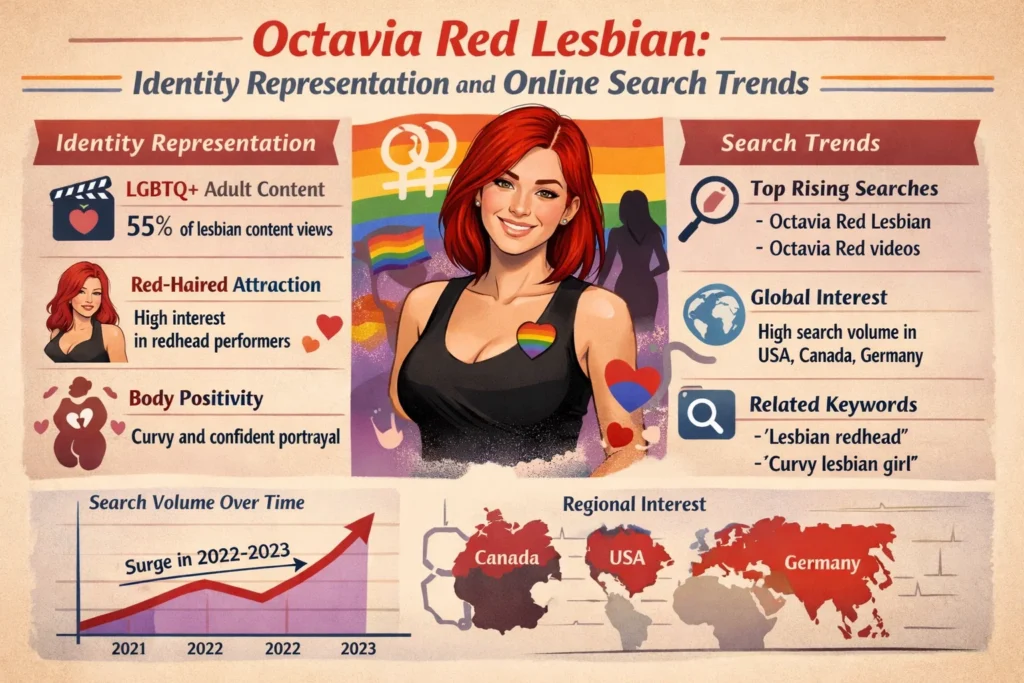

In recent years, conversations around LGBTQ+ identity, visibility, and representation have expanded rapidly across digital platforms, social media, and popular culture. One name that frequently appears in online searches is Octavia Red, often associated with the keyword “lesbian”. This rising interest reflects a broader cultural shift where people are more curious, open, and informed about sexual orientation, personal identity, and how public figures or online personalities contribute to LGBTQ+ awareness.
This article provides a complete, respectful, and informative 3,000-word guide to the topic “Octavia Red Lesbian”, focusing on identity, representation, media influence, and why such searches are becoming more common. Rather than speculation or sensationalism, this guide emphasizes understanding, inclusivity, and cultural context.
Who Is Octavia Red?
Octavia Red is a name that has circulated widely on the internet, especially across search engines, forums, and social media discussions. Depending on the context, Octavia Red may be referenced as:
An online personality
A creative or artistic persona
A public figure known for bold self-expression
A name associated with LGBTQ+ discussions and identity topics
What makes Octavia Red stand out is not just the name itself, but the way it has become connected with conversations around sexual orientation, particularly lesbian identity. This highlights how modern digital culture blends personal branding with social identity.
Understanding the Term “Lesbian”
To fully understand why “Octavia Red lesbian” is a popular search phrase, it’s important to clarify what lesbian means.
A lesbian is a woman who is emotionally, romantically, or sexually attracted to other women. Lesbian identity is a core part of the broader LGBTQ+ community, which includes diverse sexual orientations and gender identities.
Key points about lesbian identity:
It is not a trend, but a deeply personal orientation
It is recognized globally across cultures and societies
Visibility helps reduce stigma and misinformation
Representation in media plays a major role in acceptance
When a name like Octavia Red is linked with the word “lesbian,” it often reflects public interest in identity representation rather than explicit content.
Why Is “Octavia Red Lesbian” Trending Online?
There are several reasons why people search for this phrase:
- Curiosity About Identity
Audiences today are more interested in the real identities of public figures, influencers, and creators. Knowing someone’s sexual orientation can help fans feel represented and connected.
- LGBTQ+ Visibility in Media
Search trends show that people actively look for lesbian role models and personalities. Names associated with openness or queer identity naturally attract attention.
- Online Algorithms and Keywords
Sometimes a phrase trends because:
It appears in comments or forums
It is used in social media captions or hashtags
Search engines connect related terms automatically
This doesn’t always mean confirmed personal details, but rather digital association.
- Cultural Shift Toward Inclusivity
The world is becoming more open to discussions about sexuality. Searches like “Octavia Red lesbian” reflect this growing acceptance and willingness to learn.
Representation of Lesbian Identity in Digital Culture
Whether Octavia Red personally identifies as lesbian or is associated with lesbian themes, the conversation itself is important. Representation matters.
Why Representation Is Powerful
It normalizes diversity
It helps young people feel less alone
It challenges stereotypes
It encourages respectful dialogue
Digital personalities often become symbols — intentionally or unintentionally — of broader movements.
Lesbian Identity and Public Figures
Many public figures choose to openly share their sexual orientation, while others keep it private. Both choices are valid.
Important points:
No one is obligated to label themselves
Identity can be fluid and personal
Public speculation should always be respectful
If Octavia Red is discussed in LGBTQ+ contexts, it shows how audiences seek connection through shared identity — not necessarily gossip.
Social Media and Identity Branding
In today’s world, identity and online presence are closely linked.
How Identity Shapes Online Personas
Colors, aesthetics, and language often signal inclusivity
LGBTQ+ friendly branding attracts diverse audiences
Authentic expression builds trust
Names like “Octavia Red” often gain attention due to their strong, symbolic tone, which resonates with themes of individuality and confidence.
Lesbian Visibility and Its Impact on Society
Lesbian visibility has improved significantly over the past decade, but challenges still exist.
Positive Impacts
Increased acceptance in workplaces and schools
Better representation in media and entertainment
More supportive online communities
Ongoing Challenges
Stereotyping
Invasive curiosity
Online harassment
Responsible content — like informative articles instead of rumors — plays a key role in creating a healthier digital space.
Separating Fact From Assumption
When searching for phrases like “Octavia Red lesbian,” it’s crucial to understand the difference between:
Confirmed public statements
Fan interpretations
Search-engine-driven associations
Not every trending keyword reflects verified personal information. Ethical content focuses on context, not assumptions.
LGBTQ+ Culture and Online Search Trends
Search trends tell us a lot about society.
People search for:
“Is X lesbian?”
“LGBTQ influencers”
“Queer representation online”
This shows a growing desire for:
Education
Visibility
Shared experiences
Octavia Red’s name appearing in this space suggests relevance within modern identity discussions.
Respect and Privacy in Identity Discussions
One of the most important aspects of LGBTQ+ conversations is respect.
Best practices:
Avoid forcing labels
Use inclusive language
Respect privacy
Focus on representation, not speculation
Articles that handle identity responsibly help build trust and credibility.
Why Informational Articles Matter
Instead of gossip or explicit material, informational articles:
Educate readers
Improve SEO quality
Build long-term traffic
Support inclusive values
This is why long-form guides on topics like “Octavia Red lesbian” focus on culture, identity, and representation.
Common Misconceptions About Lesbian Identity
Some myths still exist:
“It’s just a phase” ❌
“All lesbians act the same” ❌
“Sexual orientation defines the whole person” ❌
Reality:
Lesbian identity is diverse
Each individual is unique
Orientation is only one part of a person’s life
The Role of Media Literacy
Readers should always approach trending keywords with critical thinking:
Who created the content?
Is the information verified?
Is the tone respectful?
This helps reduce misinformation and promotes healthier online conversations.
Conclusion
The keyword “Octavia Red lesbian” reflects more than curiosity about one name — it represents a broader cultural moment where identity, representation, and visibility matter more than ever.
Rather than focusing on rumors or explicit assumptions, meaningful discussions highlight:
LGBTQ+ awareness
Respect for personal identity
The importance of representation
Responsible digital content
As society continues to evolve, so will the way we search, talk, and learn about identity. Articles like this aim to inform, not judge — to educate, not sensationalize.