

Rose oil is one of the most precious and luxurious essential oils in the world. Known for its enchanting fragrance, therapeutic benefits, and skincare properties, rose oil has been used for centuries in beauty, medicine, and aromatherapy. From ancient Persian perfumers to modern cosmetic brands, rose oil has maintained its reputation as a symbol of elegance, romance, and healing.
However, pure rose oil is extremely expensive in the market because it takes thousands of rose petals to produce just a small amount. This is why many people prefer to make rose oil at home using traditional and natural methods. Homemade rose oil may not be as concentrated as commercial essential oil, but it is completely natural, safe, and highly effective for everyday use.
In this comprehensive guide, you will learn how to make rose oil at home, including different methods, ingredients, tips for best results, storage techniques, benefits, and common mistakes to avoid.
What Is Rose Oil?
Rose oil is an aromatic oil extracted from rose petals, primarily from Rosa damascena or Rosa centifolia. There are two main types:
Rose Essential Oil (Rose Otto or Rose Absolute) – Highly concentrated and extracted through steam distillation or solvent extraction.
Rose Infused Oil – Made by soaking rose petals in a carrier oil; ideal for home use.
This article focuses mainly on rose infused oil, which is easier and safer to make at home.
Benefits of Rose Oil
Before learning how to make rose oil, it’s important to understand why it’s so valuable.
- Skincare Benefits
Moisturizes dry and sensitive skin
Reduces redness and inflammation
Helps with acne scars and fine lines
Promotes glowing and youthful skin
- Hair Care Benefits
Nourishes the scalp
Reduces dandruff
Adds shine and softness to hair
Helps prevent hair breakage
- Emotional and Aromatherapy Benefits
Reduces stress and anxiety
Improves mood
Promotes relaxation and better sleep
Acts as a natural antidepressant
- Health Benefits
Anti-inflammatory properties
Mild antiseptic qualities
Helps soothe headaches when used in massage
Choosing the Right Roses
The quality of rose oil depends heavily on the type and freshness of roses.
Best Roses for Rose Oil
Damask Rose (Rosa damascena)
Cabbage Rose (Rosa centifolia)
Old-fashioned garden roses
Important Tips
Use organic, pesticide-free roses
Avoid store-bought roses (often sprayed with chemicals)
Pick roses early in the morning for maximum fragrance
Ensure petals are fully bloomed and fragrant
Ingredients Needed
To make rose oil at home, you will need:
Fresh rose petals (2–3 cups)
Carrier oil (olive oil, jojoba oil, almond oil, or coconut oil)
Clean glass jar with lid
Cheesecloth or fine strainer
Dark glass bottle for storage
Best Carrier Oils for Rose Oil
Choosing the right carrier oil is crucial.
- Olive Oil
Easily available
Long shelf life
Best for skin and hair
- Jojoba Oil
Closest to natural skin oils
Ideal for facial use
- Sweet Almond Oil
Lightweight
Perfect for massage oils
- Coconut Oil
Solid at room temperature
Excellent for hair care
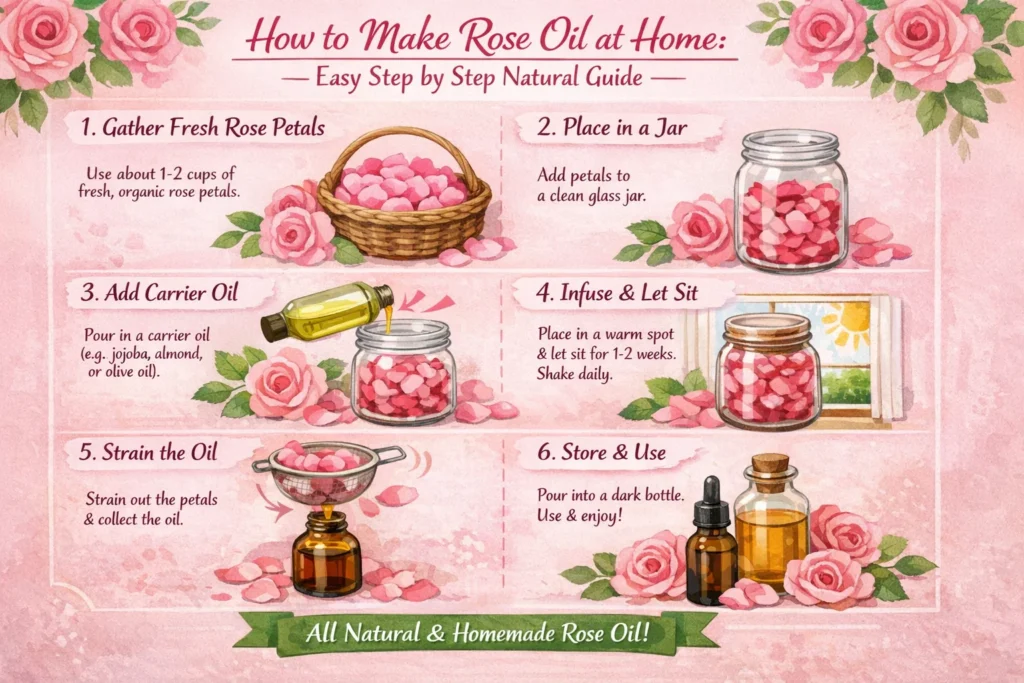
Method 1: Traditional Sun-Infusion Method
This is the most common and easiest way to make rose oil.
Step-by-Step Instructions
Wash and Dry Petals
Gently rinse rose petals to remove dirt and insects. Let them air-dry completely to prevent mold.
Crush the Petals
Lightly crush the petals using your hands or a mortar to release natural oils.
Fill the Jar
Place petals in a clean glass jar and fill it about ¾ full.
Add Carrier Oil
Pour carrier oil until petals are fully submerged.
Seal and Place in Sunlight
Close the jar tightly and place it in direct sunlight for 2–4 weeks.
Shake Daily
Gently shake the jar once a day to mix ingredients.
Strain the Oil
After 4 weeks, strain the oil using cheesecloth.
Repeat for Stronger Scent
Add fresh petals to the strained oil and repeat the process once or twice.
Store Properly
Transfer oil to a dark glass bottle and store in a cool place.
Method 2: Double Boiler (Heat) Method
This method is faster and ideal if you need rose oil quickly.
Steps
Add rose petals and carrier oil to a heat-safe bowl.
Place the bowl over a pot of simmering water.
Heat gently for 2–3 hours on low heat.
Stir occasionally.
Let it cool and strain the oil.
Store in a dark bottle.
Note: Avoid high heat to preserve fragrance.
Method 3: Dried Rose Petal Method
Using dried petals reduces moisture and increases shelf life.
Steps
Fully dry rose petals in shade.
Fill a jar with dried petals.
Cover with carrier oil.
Let it infuse for 4–6 weeks.
Strain and store.
How to Make Rose Essential Oil (Why It’s Difficult)
True rose essential oil requires steam distillation, professional equipment, and thousands of petals. This is why it’s not practical at home. Homemade rose oil is an infused oil, not essential oil—but it still offers excellent benefits.
How to Use Rose Oil
- For Face
Apply a few drops as a moisturizer
Use as a facial massage oil
- For Hair
Massage into scalp before washing
Add to hair masks
- For Body
Use as a massage oil
Mix with body lotion
- Aromatherapy
Apply to pulse points
Use in oil burners (lightly)
Storage and Shelf Life
Store in a dark glass bottle
Keep away from heat and sunlight
Shelf life: 6–12 months
Refrigeration can extend freshness
Common Mistakes to Avoid
Using wet petals (causes mold)
Exposing oil to high heat
Using chemically treated roses
Not sealing the jar properly
Skipping straining process
Tips for Best Results
Use fresh petals for stronger aroma
Repeat infusion process for better fragrance
Label jars with date
Perform a patch test before skin use
Rose Oil vs Rose Water
Feature Rose Oil Rose Water
Texture Oily Watery
Uses Massage, skincare Toner, mist
Shelf Life Longer Shorter
Aroma Rich Light
Frequently Asked Questions
Can I use rose oil daily?
Yes, it is safe for daily use when properly made.
Is homemade rose oil safe for sensitive skin?
Yes, but always perform a patch test.
Can I mix rose oil with other oils?
Yes, it blends well with lavender, sandalwood, and jasmine oils.
Conclusion
Making rose oil at home is a rewarding and fulfilling process. While it may take time and patience, the result is a natural, chemical-free oil that offers numerous benefits for skin, hair, and emotional well-being. By choosing the right roses, following proper methods, and storing it correctly, you can enjoy the luxury of rose oil at a fraction of the cost.