
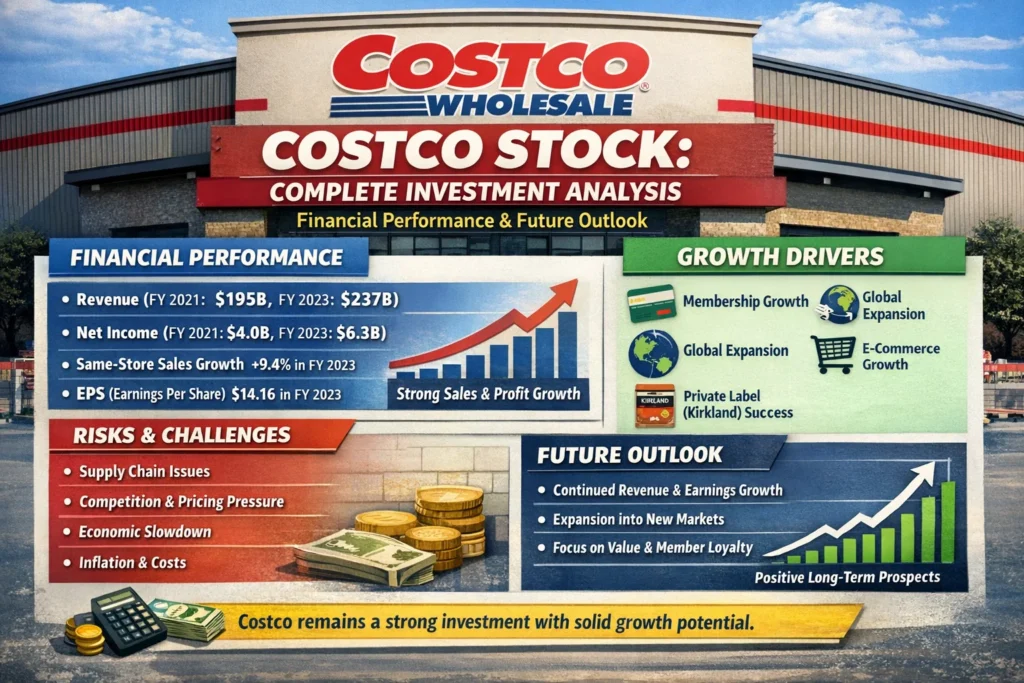

Costco Wholesale Corporation (NASDAQ: COST) is one of the most admired retail companies in the world. Known for its membership-based warehouse model, Costco has built a loyal customer base, strong brand reputation, and a business structure that consistently delivers long-term value to investors. Costco stock has become a favorite among long-term investors due to its steady growth, resilient business model, and disciplined management.
In this in-depth article, we will explore Costco stock from every angle—company background, business model, revenue streams, financial performance, stock history, valuation, dividends, risks, and future growth potential. Whether you are a beginner investor or an experienced market participant, this guide will help you understand whether Costco stock deserves a place in your investment portfolio.
Overview of Costco Wholesale Corporation
Costco Wholesale Corporation was founded in 1983 in Seattle, Washington. Since then, it has grown into one of the largest retailers globally, operating hundreds of warehouse clubs across multiple countries.
Key Facts About Costco
Ticker Symbol: COST
Stock Exchange: NASDAQ
Industry: Retail – Consumer Staples
Business Model: Membership-based warehouse retail
Global Presence: United States, Canada, Mexico, UK, Japan, South Korea, Australia, and more
Costco’s core philosophy is simple: offer high-quality products at the lowest possible prices while operating on thin margins. This approach has helped the company gain trust and loyalty from millions of customers worldwide.
Costco’s Unique Business Model
Costco’s business model sets it apart from traditional retailers and is a major reason for its stock’s long-term success.
Membership Revenue
One of Costco’s most powerful advantages is its membership program. Customers pay an annual fee to shop at Costco warehouses. This recurring revenue stream provides stability and predictability to the company’s earnings.
Gold Star Membership
Executive Membership
Business Membership
Membership fees account for a significant portion of Costco’s profits, allowing the company to keep product prices extremely competitive.
Low-Margin, High-Volume Strategy
Unlike many retailers that rely on high markups, Costco operates with very low margins. The company sells products in bulk, reduces operational costs, and limits product selection to increase efficiency.
This strategy results in:
High inventory turnover
Strong customer loyalty
Consistent cash flow
Costco Stock Performance Overview
Costco stock has delivered impressive long-term returns, outperforming many competitors in the retail sector.
Historical Stock Growth
Over the past decades, Costco stock has shown:
Strong upward trends
Lower volatility compared to other retail stocks
Resilience during economic downturns
Even during periods of market uncertainty, Costco stock has demonstrated stability due to its essential-goods focus and membership-driven revenue.
Long-Term Investor Appeal
Investors often consider Costco a “buy and hold” stock because of:
Consistent earnings growth
Reliable management
Strong balance sheet
Defensive business nature
Financial Performance and Revenue Growth
Revenue Streams
Costco generates revenue from:
Merchandise sales
Membership fees
Private-label brand (Kirkland Signature)
The Kirkland Signature brand plays a critical role in boosting margins and strengthening customer loyalty.
Earnings Growth
Costco has consistently reported:
Growing revenues year over year
Stable operating margins
Strong free cash flow generation
The company’s disciplined cost control and efficient supply chain contribute significantly to its financial success.
Costco’s Competitive Advantages
Brand Loyalty
Costco has one of the highest customer loyalty rates in the retail industry. Renewal rates for memberships remain exceptionally high, especially in the United States and Canada.
Limited Product Selection
Unlike traditional supermarkets that carry tens of thousands of products, Costco focuses on a limited selection of high-quality items. This reduces complexity and improves purchasing power with suppliers.
Private Label Strength
Kirkland Signature products are known for quality and affordability, competing directly with premium national brands.
Dividend History and Shareholder Returns
Costco Dividend Policy
Costco is not known as a high-dividend stock, but it offers:
Regular quarterly dividends
Occasional special dividends
The company prioritizes reinvesting profits into growth while still rewarding shareholders.
Share Buybacks
Costco also returns value to shareholders through share repurchases, which help support stock prices over time.
Valuation Analysis of Costco Stock
Price-to-Earnings (P/E) Ratio
Costco stock often trades at a premium valuation compared to other retail companies. This premium reflects:
Strong growth prospects
Reliable earnings
Brand strength
While some investors view Costco as expensive, others believe the premium is justified due to the company’s quality and consistency.
Growth vs. Value Debate
Costco is often categorized as a “growth at a reasonable price” stock rather than a traditional value stock.
Risks and Challenges for Costco Stock
No investment is without risk, and Costco stock is no exception.
Margin Pressure
Costco’s low-margin strategy means:
Limited pricing flexibility
Sensitivity to rising costs
Economic Slowdowns
Although Costco sells essential goods, economic downturns can impact discretionary spending.
Competition
Costco faces competition from:
Walmart
Amazon
Sam’s Club
Regional warehouse clubs
However, Costco’s membership model provides a strong competitive moat.
Costco Stock vs Competitors
Costco vs Walmart
Costco focuses on bulk and membership
Walmart emphasizes everyday low prices and massive scale
Costco vs Amazon
Costco relies on physical warehouses
Amazon dominates e-commerce
Despite differences, Costco has maintained strong growth alongside these giants.
International Expansion and Growth Opportunities
Costco continues to expand globally, opening new warehouses in:
Asia
Europe
Australia
International markets represent a major long-term growth opportunity for Costco stock.
E-Commerce Growth
Although traditionally focused on physical stores, Costco has invested in:
Online shopping
Delivery services
Digital membership management
Management and Corporate Governance
Costco is widely respected for its ethical management and employee-friendly culture.
Employee Treatment
Costco offers:
Competitive wages
Strong benefits
Low employee turnover
This approach enhances productivity and customer satisfaction.
Is Costco Stock a Good Investment?
For Long-Term Investors
Costco stock is ideal for:
Long-term investors
Conservative growth seekers
Dividend growth investors
For Short-Term Traders
Due to its premium valuation and lower volatility, Costco may be less attractive for short-term trading strategies.
Analyst Sentiment and Market Confidence
Many analysts maintain positive outlooks on Costco stock, citing:
Strong fundamentals
Stable growth
Defensive characteristics
Market confidence remains high due to Costco’s proven track record.
Future Outlook for Costco Stock
Growth Drivers
Membership growth
International expansion
Private-label expansion
E-commerce integration
Long-Term Vision
Costco’s long-term strategy focuses on:
Customer trust
Price leadership
Operational efficiency
These factors support a positive long-term outlook for Costco stock.
Final Thoughts
Costco Wholesale Corporation stands as one of the strongest retail businesses in the world. Its disciplined management, loyal customer base, and unique membership model have helped Costco stock deliver consistent returns over time.
While the stock may appear expensive compared to traditional retailers, its premium valuation reflects quality, stability, and long-term growth potential. For investors seeking a reliable, well-managed company with strong fundamentals, Costco stock remains a compelling investment choice.