
Drinking toasts are one of the oldest and most universal social traditions in human history. From ancient royal banquets to modern weddings, birthday parties, and casual gatherings, raising a glass and offering a toast has long symbolized celebration, unity, respect, and goodwill. Whether it is a simple “cheers” among friends or a carefully prepared speech at a formal event, drinking toasts hold cultural, emotional, and historical significance.
Despite their simplicity, drinking toasts reflect deep social values. They bring people together, mark special moments, honor individuals, and express shared hopes for health, happiness, and success. Across cultures, languages, and centuries, the act of toasting has evolved while preserving its core purpose: connecting people through shared celebration.
This article explores the meaning, origins, history, cultural variations, etiquette, types, famous examples, and modern relevance of drinking toasts, offering a complete guide to understanding this timeless tradition.
What Is a Drinking Toast?
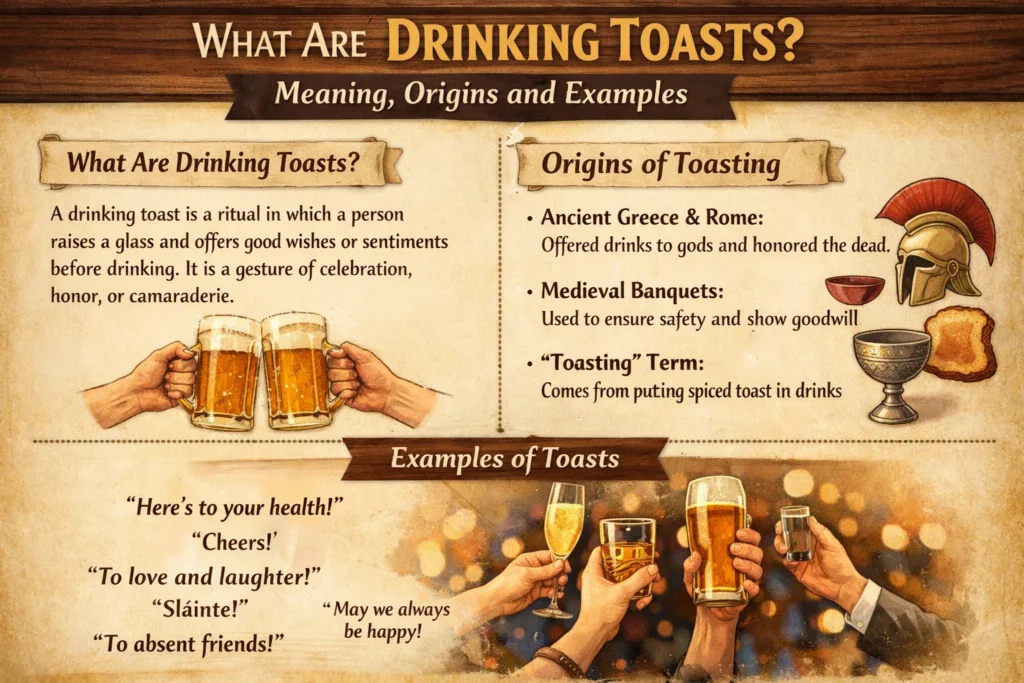
A drinking toast is a spoken expression of goodwill, honor, or celebration made before taking a sip of a beverage—traditionally alcohol, but increasingly non-alcoholic drinks as well. The person making the toast raises their glass, speaks a few words, and invites others to join in drinking together.
At its heart, a toast is about acknowledgment and connection. It may celebrate an event, honor a person, remember someone absent, or wish good fortune to everyone present.
Although alcohol has historically played a major role in toasting, modern toasts often include sparkling water, juice, or soft drinks, making the practice inclusive and respectful of personal preferences.
The Origins and History of Drinking Toasts
Ancient Civilizations
The tradition of drinking toasts dates back thousands of years. In ancient Greece and Rome, toasts were offered to gods, heroes, and honored guests during feasts and ceremonies. Wine was believed to be a divine gift, and offering a toast was a way to seek blessings and express gratitude.
Some historians suggest that early toasts also served as a sign of trust. By drinking together from shared vessels, hosts and guests demonstrated that the drink was safe and free from poison.
Medieval Europe
During the Middle Ages, toasting became more formalized. Banquets often included ceremonial toasts to the king, the church, or the host. The word “toast” itself may come from the medieval practice of placing spiced toast into wine to improve its flavor.
Clinking glasses became popular during this era, symbolizing unity and shared intention.
Modern Era
By the 18th and 19th centuries, toasting had become an essential part of social etiquette in Europe and North America. Toasts were common at weddings, military events, political gatherings, and social clubs.
Today, drinking toasts remain a global tradition, adapted to modern values while preserving their symbolic power.
The Meaning Behind Drinking Toasts
Drinking toasts carry several symbolic meanings:
Unity – Everyone drinks together, reinforcing social bonds
Respect – Honoring individuals, traditions, or achievements
Celebration – Marking joyful or meaningful occasions
Goodwill – Expressing hopes for health, success, and happiness
Remembrance – Paying tribute to absent or departed individuals
A well-delivered toast can transform a simple moment into a meaningful memory.
Types of Drinking Toasts
- Celebration Toasts
These are the most common toasts, made during birthdays, weddings, anniversaries, graduations, and promotions. They focus on joy, achievement, and shared happiness.
Example:
“To new beginnings, shared laughter, and a future full of success.”
- Honor Toasts
Honor toasts recognize a specific individual or group, such as a guest of honor, a retiree, or a leader.
Example:
“To Sarah, whose dedication and kindness inspire us all.”
- Wedding Toasts
Wedding toasts are among the most emotional and memorable. They are typically given by best men, maids of honor, family members, or close friends.
They often include personal stories, humor, and heartfelt wishes for the couple’s future.
- Memorial Toasts
These toasts honor someone who has passed away. They are respectful, sincere, and reflective.
Example:
“To those who are no longer with us, but forever in our hearts.”
- Formal and Ceremonial Toasts
Used at official events, military gatherings, or diplomatic functions, these toasts follow strict protocols and often recognize institutions, nations, or traditions.
Drinking Toasts Around the World
United States and United Kingdom
In English-speaking countries, “cheers” is the most common expression. Toasts are often informal, friendly, and humorous, especially in social settings.
France
The French say “Santé”, meaning “health,” or “À votre santé.” Toasts are usually brief and elegant.
Germany
In Germany, “Prost” or “Zum Wohl” is common. Eye contact during the toast is considered important and respectful.
Italy
Italians say “Salute”, emphasizing health and well-being.
Spain and Latin America
“Salud” is the standard toast, sometimes extended with phrases wishing love and prosperity.
Japan
In Japan, the word “Kanpai” is used. Toasts are respectful and hierarchical, with younger participants often raising their glasses slightly lower than elders.
China
Chinese toasts often include long speeches and multiple rounds. The phrase “Ganbei” means “dry the glass,” encouraging participants to finish their drink.
Toasting Etiquette: Do’s and Don’ts
Do’s
Keep your toast concise and clear
Speak loudly enough to be heard
Maintain eye contact when appropriate
Raise your glass respectfully
Be inclusive and considerate
Don’ts
Don’t make offensive or inappropriate jokes
Avoid embarrassing personal details
Don’t drink before the toast is complete
Avoid overly long speeches
Never pressure others to drink alcohol
Good etiquette ensures that the toast enhances the moment rather than distracting from it.
Famous Drinking Toasts in History and Literature
Throughout history, many famous figures have delivered memorable toasts:
Benjamin Franklin often toasted to unity and liberty
Winston Churchill was known for witty and resilient toasts during wartime
Literary works from Shakespeare to modern novels frequently reference toasts as symbols of camaraderie and fate
These examples highlight how toasts can capture the spirit of an era or a defining moment.
Writing the Perfect Drinking Toast
A great toast doesn’t require poetic brilliance—just sincerity and clarity. Follow these simple steps:
Know your audience
Start with a strong opening
Share a meaningful message or story
Keep it brief (30–90 seconds)
End with a clear invitation to drink
Authenticity matters more than perfection.
Non-Alcoholic Toasts and Modern Inclusivity
Modern society increasingly recognizes that not everyone drinks alcohol. Today, many hosts encourage non-alcoholic toasts using sparkling water, juice, or mocktails.
The meaning of the toast remains unchanged—the focus is on connection, not the beverage itself.
Drinking Toasts in Pop Culture
Movies, television shows, and music frequently depict drinking toasts as pivotal moments. From celebratory victory scenes to emotional farewells, toasts often signal unity, resolution, or transformation.
These portrayals reinforce the cultural importance of toasting as a shared human ritual.
Psychological and Social Impact of Toasting
Research in social psychology suggests that shared rituals, such as toasting, strengthen group identity and emotional bonds. The synchronized act of raising glasses and drinking together fosters a sense of belonging and trust.
This may explain why toasts remain popular even in digital and fast-paced modern life.
The Future of Drinking Toasts
As cultures evolve, drinking toasts continue to adapt. Virtual toasts via video calls, eco-friendly events, and inclusive celebrations demonstrate that the tradition is flexible and enduring.
Despite changes in lifestyle and technology, the core purpose of toasting—connection, celebration, and shared humanity—remains unchanged.
Conclusion
Drinking toasts are far more than simple words spoken over a glass. They are powerful expressions of unity, respect, celebration, and remembrance. From ancient rituals to modern gatherings, toasts have bridged generations and cultures, reminding us of the importance of shared moments.
Whether spoken at a grand wedding, a quiet family dinner, or a virtual celebration, a sincere toast has the power to bring people together and make moments unforgettable.