
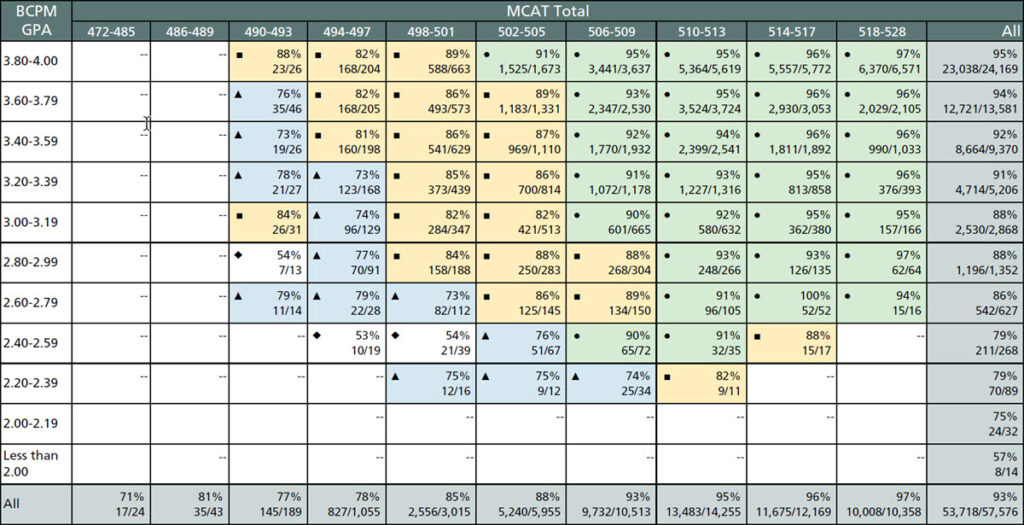

The Medical College Admission Test (MCAT) is one of the most important exams for students who plan to apply to medical school in the United States, Canada, or select international programs. Because the MCAT plays such a major role in admissions, students constantly look for tools like an MCAT Score Calculator to help them estimate their total score, convert raw scores to scaled scores, understand percentiles, and predict their chances of getting into medical school.
This comprehensive 3,000-word guide explains how MCAT scoring works, how score calculators function, how to interpret your results, what score you need for top med schools, how to track progress, and how to use calculators for study planning.
- Introduction: Why an MCAT Score Calculator Matters
The MCAT is not just a test—it is a gateway. Medical schools use MCAT scores:
To assess academic readiness
To predict performance in medical school
To compare applicants objectively
To evaluate science proficiency and reasoning ability
Because the MCAT uses a scaled scoring system—not raw scores—students often feel confused. Questions like the following are extremely common:
“How many questions can I get wrong for a 510?”
“What does a 128 in CARS mean?”
“How do raw scores convert to scaled MCAT scores?”
“What percentile is a 515?”
An MCAT Score Calculator solves this confusion by giving students the ability to:
Convert raw scores into scaled MCAT section scores
Predict total MCAT score
Estimate percentile rank
Compare themselves to other test-takers
Predict competitiveness for medical schools
Understanding how the calculator works is essential for building a strategic MCAT study plan.
- How MCAT Scoring Works (2025 Overview)
Before using a score calculator, you must understand how the MCAT is scored.
The exam consists of four sections, each scored from 118 to 132:
Chemical and Physical Foundations of Biological Systems (Chem/Phys)
Critical Analysis and Reasoning Skills (CARS)
Biological and Biochemical Foundations of Living Systems (Bio/Biochem)
Psychological, Social, and Biological Foundations of Behavior (Psych/Soc)
Total MCAT Score Range:
472 (lowest) → 528 (highest)
Example:
If you score 125 in each section → 500 total
If you score 128 in each section → 512 total
If you score 130 in each section → 520 total
Formula:
Total MCAT Score = Sum of the 4 section scores
- What an MCAT Score Calculator Does
An MCAT Score Calculator generally performs four major functions:
- Raw-to-Scaled Score Conversion
Each MCAT section has passages + discrete questions. Your “raw score” is simply the number of questions you answer correctly.
However, AAMC scales the score to adjust for:
Difficulty differences
Test version variations
Statistical normalization
Since AAMC does not release exact raw-to-scaled conversions, third-party calculators estimate them using:
Released AAMC sample tests
Historical conversion data
User-reported scores
- Total Score Calculation
The calculator adds up your four section scores to produce a total between 472–528.
- Percentile Estimation
The MCAT uses percentile rankings, which show how you compare to other test-takers.
Example:
500 = 45th percentile
510 = 78th percentile
515 = 90th percentile
520 = 97th percentile
525 = 99+ percentile
- Competitiveness Prediction
Many calculators compare your score to med school averages.
Examples:
506 → Moderate competitiveness
510 → Competitive
515 → Very competitive
520+ → Extremely competitive (top 10 med schools)
- MCAT Raw-to-Scaled Score Conversion (Detailed Breakdown)
Each MCAT section generally contains 59 questions, except CARS which has 53 questions.
Below is a typical raw-to-scaled estimation (approximate):
Chem/Phys (59 Questions)
44 correct → 125
47 correct → 126
50 correct → 127
53 correct → 128
56 correct → 129
58 correct → 130–131
CARS (53 Questions)
34 correct → 125
37 correct → 126
40 correct → 127
42 correct → 128
44 correct → 129
48 correct → 130
Bio/Biochem (59 Questions)
45 correct → 125
48 correct → 126
51 correct → 127
54 correct → 128
57 correct → 129–130
Psych/Soc (59 Questions)
46 correct → 125
49 correct → 126
52 correct → 127
55 correct → 128
57 correct → 129
59 correct → 130–132
Raw-to-scaled curves vary by exam, but calculators provide reliable estimates.
- How an MCAT Score Calculator Helps Students Study Smarter
- Identifies Weak Areas
By converting raw practice-test scores into scaled scores, you can easily see:
Which sections need more time
Whether timing is an issue
Whether content or reasoning skills need improvement
- Tracks Improvement
Example improvements:
498 → 503 → 508 → 512
502 → 507 → 515 → 519
Tracking trends matters more than individual scores.
- Helps Set Target Scores
Different med schools require different MCAT levels:
DO schools: 495–505
Lower-tier MD: 505–510
Mid-tier MD: 510–515
Top-tier MD: 515–520
Ivy League: 520+
Using a calculator, students set realistic goals.
- Helps You Analyze AAMC Practice Exams
AAMC offers:
Sample Test
Practice Exam 1
Practice Exam 2
Practice Exam 3
Practice Exam 4
MCAT Score Calculators estimate your real exam score based on these results.
- Types of MCAT Score Calculators Available
Different calculators offer different features.
- Simple Score Calculator
Input raw scores
Get scaled scores
- Full-Length Exam Score Predictor
Input each section performance
Calculates total score
Estimates percentile
- Medical School Acceptance Predictor
Enter MCAT + GPA
Compare with med school averages
- AAMC-Based Score Converter
Uses AAMC FL data to predict real score
Most accurate version
- Customized Study Planner
Based on your score, creates a study schedule
Recommends resources
- MCAT Percentiles Explained (2025)
Percentiles tell you how you rank among all MCAT takers.
Examples:
Total Score Percentile Interpretation
500 45% Average
505 55% Slightly above average
510 78% Competitive
515 90% Very strong
520 97% Top performer
525 99% Exceptional
Medical schools use percentiles more than raw scores because they provide context.
- What MCAT Score Do You Need for Medical School?
DO Schools (Osteopathic)
Minimum accepted: 490–495
Competitive: 498–505
Mid-Tier MD Schools
Competitive: 510–512
Top MD Schools
Average enters with 516–522
Ivy League Medical Schools
Average MCAT: 520–523
Harvard, Stanford, NYU
Median MCAT: 521–523
Score calculators show where you stand relative to these numbers.
- MCAT Score Calculator Example (Step-by-Step)
Imagine you take a practice test and get:
Chem/Phys: 48 correct
CARS: 40 correct
Bio/Biochem: 52 correct
Psych/Soc: 54 correct
Using typical raw conversion:
CP → 126
CARS → 127
BB → 127
PS → 128
Total Score = 126 + 127 + 127 + 128 = 508
Percentile ≈ 76%
Competitiveness:
DO: very strong
MD: competitive
Top 20: weak
Ivy League: not enough
This is how score calculators help you set realistic goals.
- What Is a Good MCAT Score in 2025?
“Good” depends on the student’s goals.
500–505
Average
Acceptable for some DO schools
506–509
Slightly above average
Good for many DO or lower-tier MD programs
510–515
Very good
Competitive for most MD schools
516–520
Excellent
Competitive for top MD schools
520–525
Outstanding
Competitive for Ivy League
- How to Use Score Calculators to Improve Study Strategy
- Analyze Each Section
Score calculators help break down performance.
Example:
Chem/Phys low → weak physics/chemistry foundation
CARS low → critical reading issues
Bio/Biochem low → need molecular biology review
Psych/Soc low → memorize terms and theories
- Identify Timing Problems
If raw scores drop under timed conditions, practice pacing.
- Use Detailed Error Logs
Track why you got a question wrong:
Content gap
Misreading
Reasoning error
Guessing
Running out of time
- Plan Study Hours Based on Weakness
High scorers study 300–600 hours.
- Common Mistakes Students Make When Using MCAT Score Calculators
- Relying on One Practice Test
Scores vary by ±5 points.
- Expecting Exact Accuracy
Calculators provide estimates—actual scores may differ slightly.
- Not Reviewing Mistakes
The goal is improvement, not just calculating scores.
- Comparing Too Early
Don’t compare scores until 6 weeks of consistent studying.
- Ignoring CARS
CARS is the hardest to improve yet most important.
- How Accurate Are MCAT Score Calculators?
Accuracy depends on:
Data source
Raw-to-scaled conversion tables
AAMC practice exam correlation
Statistical modeling
Most accurate calculators:
Use AAMC FL data
Use large number of score reports
Update curves every year
Typical accuracy:
±1–2 points per section
±3–5 points on total score
- MCAT Score Calculator for AAMC Practice Exams
AAMC full-length exams are the best predictors.
AAMC FL Correlation with Real Score
Sample Test Least accurate
FL1 Medium
FL2 High
FL3 Very high
FL4 Extremely accurate
Calculators using AAMC FL2–4 give the best predictions.
- Final Tips to Improve Your MCAT Score
- Take 6–8 full-length exams
Simulate real testing conditions.
- Review every mistake
Active review improves retention.
- Use spaced repetition
Anki is extremely effective.
- Study biology and biochemistry first
They form the largest exam portion.
- Practice CARS daily
10–12 passages per day is ideal.
- Focus on high-yield topics
Such as:
Amino acids
Enzyme kinetics
Psychology theories
Physics equations
Metabolism pathways
- Take calculated breaks
Avoid burnout during a long study schedule.
- Conclusion: Why Every MCAT Student Should Use a Score Calculator
An MCAT Score Calculator is an essential tool for:
Performance tracking
Goal setting
Realistic score prediction
Med school competitiveness estimation
Identifying weaknesses
Building an efficient study plan
While calculators cannot guarantee your final score, they offer the closest possible prediction based on practice-test performance and historical scoring patterns.
If used properly, an MCAT Score Calculator can help you boost your score by 5, 10, or even 15+ points, greatly increasing your chances of getting into medical school.