
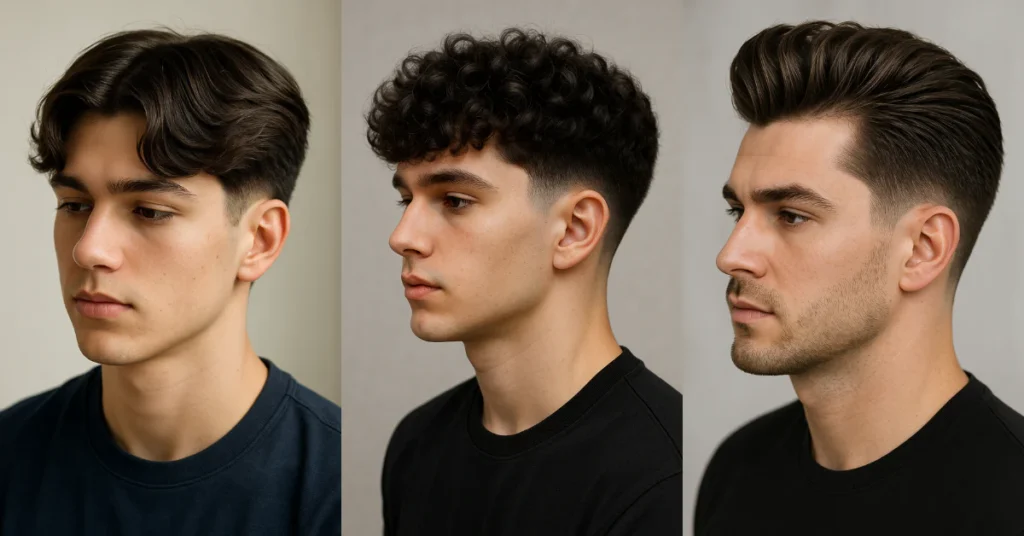

The low taper fade has become one of the most in-demand hairstyles for men around the world. With its clean outline, subtle gradient, and unmatched versatility, it suits almost every hair type, face shape, and personal style. Whether you’re a barber perfecting your craft or someone looking to upgrade your hairstyle, understanding the low taper fade is essential.
This comprehensive 3,000-word guide covers everything—its origins, why it’s trending, how to get it, variations, maintenance, tools, mistakes to avoid, and style inspiration. By the end, you’ll know exactly why the low taper fade is considered the king of modern men’s grooming.
Chapter 1: What Is a Low Taper Fade?
A low taper fade is a haircut where the hair gradually shortens as it moves down the head, with the fade starting just above the ears and following the natural hairline. Unlike a mid or high taper, the low taper focuses on subtlety. It keeps most of the hair’s volume intact while adding sharpness around the edges.
Key features:
Fade begins low on the sides
Soft gradient with no harsh transitions
Clean neckline and sideburns
Suitable for curly, straight, wavy, or coily hair
Can be paired with almost any top style
The low taper fade is the perfect choice for people who want a fresh, modern, and professional look without going too extreme.
Chapter 2: Why the Low Taper Fade Is So Popular
The explosion of social media influencers, athletes, and celebrities showing off taper fades has contributed to its popularity. But the real reason behind its global hype lies deeper.
- Universally Flattering
The low taper fade works for:
Round faces
Square jaws
Oval faces
Diamond or heart-shaped faces
It enhances facial symmetry while maintaining balance.
- Perfect for Professional Settings
Unlike high fades, the low taper remains subtle and office-friendly. It looks clean without being too bold.
- Works with Any Hairstyle
You can pair a low taper fade with:
Quiffs
Curls
Waves
Braids
Twists
Pompadours
Buzz cuts
Messy tops
Its flexibility is unmatched.
- Low Maintenance
A low taper fade grows out gracefully, making it ideal for people who can’t visit the barber every week.
- Clean, Sharp Appearance
The crisp lines on the neck and temples create a well-groomed, stylish effect.
Chapter 3: The History & Evolution of the Taper Fade
Though taper fades became mainstream in the 2000s and 2010s, their roots go back much further.
1950s–1960s: The Classic Gentlemen’s Taper
In the mid-20th century, barbers started tapering necklines and sideburns for a clean look.
1980s–1990s: Rise in Hip-Hop Culture
Artists sported sharp fades with detailed lineups, inspiring new trends in Black communities.
2000s–2010s: Modern Barbering Revolution
New tools, techniques, and social media brought fades into the spotlight.
2020s: Global Dominance of the Low Taper
Today, the low taper fade is a universal trend—from America to Europe to Asia.
Chapter 4: Types of Low Taper Fades
There isn’t just one kind of low taper fade. Here are the most popular variations:
- Classic Low Taper Fade
Soft, clean, and elegant. Suited for professionals or minimalists.
- Low Burst Taper Fade
The fade curves around the ear, creating a “burst” effect. Popular for curly or afro-textured hair.
- Low Drop Taper Fade
Follows the natural head shape and “drops” behind the ear.
- Low Taper Fade with Curls
Enhances natural curls by adding structure on the sides.
- Low Taper Fade with Wavy Hair
Great for beach-wave or relaxed wavy textures.
- Low Taper Fade with Textured Top
A favorite among Gen Z influencers — messy but stylish.
- Low Taper Fade with Braids or Twists
Creates contrast between the top braids and clean fade.
- Low Taper Fade with Line-Up
Adds razor-sharp angles around the forehead and temple area.
- Low Skin Taper Fade
Shaves the lowest part down to the skin for maximum sharpness.
Chapter 5: How to Get a Low Taper Fade (Barber Guide)
Step 1: Consultation
A barber must understand:
Desired length on top
Fade level
Hair texture
Professional or casual style
Step 2: Sectioning the Top
Clip or tie the top hair to avoid accidental cuts.
Step 3: Start the Initial Guideline
Using a #1 guard, create a horizontal guideline just above the ear.
Step 4: Create the Fade
Use:
2 guard
1.5 guard
1 guard
0.5 guard
Open/closed lever techniques
This blends the fade without lines.
Step 5: Detail the Neck and Sideburns
This is what makes the low taper fade look sharp.
Step 6: Line-Up (Optional)
Use a trimmer or razor to line the forehead and temples.
Step 7: Work on the Top
Shape the top according to the client’s preferred style.
Chapter 6: Tools Required for a Perfect Low Taper Fade
Clippers
Andis, Wahl, or Babyliss clippers.
Trimmers
Used for detailing and cleanup.
Guards
Sizes 0.5 to 4 are essential.
Straight Razor
For sharp finishing lines.
Blending Shears
To soften transitions.
Chapter 7: Maintenance Guide
A low taper fade is low maintenance but still needs care.
- Weekly Edge Cleanup
Keeps the fade looking fresh.
- Moisturizing the Hair
Use leave-in conditioner for curls or waves.
- Daily Styling Products
Depending on hair type:
Pomade
Curl cream
Matte clay
Hair gel
Sea salt spray
- Trim Every 2–3 Weeks
To maintain sharpness.
Chapter 8: Best Products for Styling
For Straight Hair
Matte clay
Pomade
For Curly Hair
Curl activator
Shea butter cream
For Wavy Hair
Sea salt spray
Mousse
Chapter 9: Mistakes to Avoid
- Starting the Fade Too High
It ruins the “low” taper effect.
- Leaving Harsh Lines
A good fade is smooth.
- Cutting Wet Hair for the Fade
Fades should be done on dry hair.
- Over-Thinning the Top
Destroys shape and structure.
Chapter 10: Who Should Get a Low Taper Fade?
Best for:
Students
Professionals
Athletes
Influencers
Barbershop clients
Men with curls, waves, or straight hair
The low taper fade fits nearly everyone.
Chapter 11: Face Shapes & Suitability
Round Faces
Adds definition.
Square Faces
Highlights strong jawlines.
Oval Faces
Works effortlessly.
Diamond Faces
Balances the cheekbones.
Chapter 12: Celebrities Who Wear Low Taper Fades
Drake
Timothée Chalamet
Cristiano Ronaldo
Zayn Malik
Justin Bieber
NBA players with curly tops
Their influence fuels the trend.
Chapter 13: Low Taper Fade vs Mid Fade vs High Fade
Low Fade
Subtle, natural, professional.
Mid Fade
Balanced and modern.
High Fade
Bold, edgy, military-style.
The low taper fade wins for versatility.
Chapter 14: Variations with Beard Styles
Low Taper Fade with Full Beard
Masculine and balanced.
Low Taper Fade with Stubble
Clean yet rugged.
Low Taper Fade with Sharp Beard Fade
Ultra-modern look.
Chapter 15: Final Thoughts
The low taper fade is more than just a haircut—it’s a lifestyle. Whether you’re a barber or a client, this style provides unmatched flexibility, sharpness, and long-term appeal. Its subtlety makes it suitable for all age groups, job types, and fashion styles.
As trends continue to evolve, the low taper fade remains a timeless, modern classic — and its global popularity is only growing.